Perfect Stranger

One of the questions that most piques the curiosity of people who meet me for the first time and discover my role as a hi-fi product reviewer is this: Don't you feel bad when you have to return the equipment you've been loaned to write your review?
In this case, the answer is a resounding "NO." I don't feel bad, because when something leaves, something else comes along. It's a never-ending cycle. And on top of that, in this case, it's not leaving, since it's part of my music system.
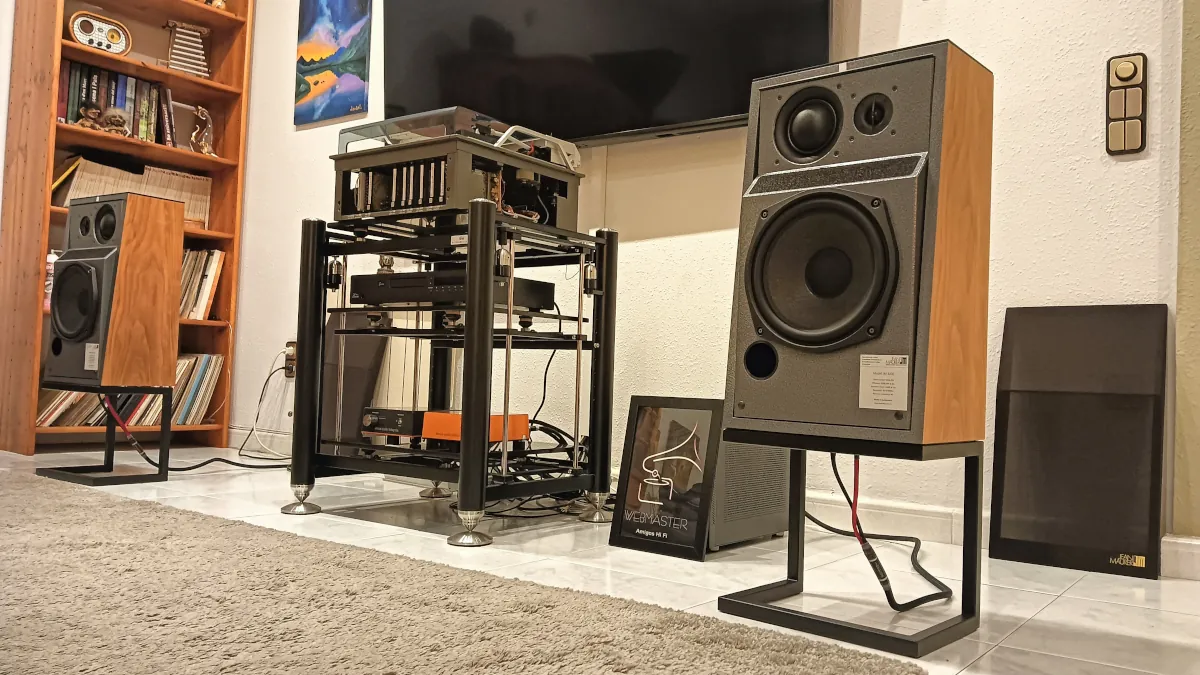
I don't believe in the perfect sound, which is why I like to vary the character of the music playing in my listening room. In the digital realm, I constantly have two DACs with their own personalities and distinct sound signatures. And now, with speakers, I'm going to do the same. My RadioTehnika speakers have superb physical presence in the room, and I had to find something different from them—which was complicated. From large-format speakers with a strong presence to much smaller ones to fill my room—my paradise, my nirvana of happy moments and those that aren't—with other qualities. Speakers that respect my music, my second soul. The task at hand was far from easy.
Some time ago I wrote about the Diapason Karis III. These were very compact monitors of such great beauty that my wife was in no hurry to see them leave our home. The presence of the vocals on them was sublime, and I remember legendary moments listening to opera with them. But the relationship between the room and the speakers wasn't quite right, as they lacked a bit of presence due to the size of the room.
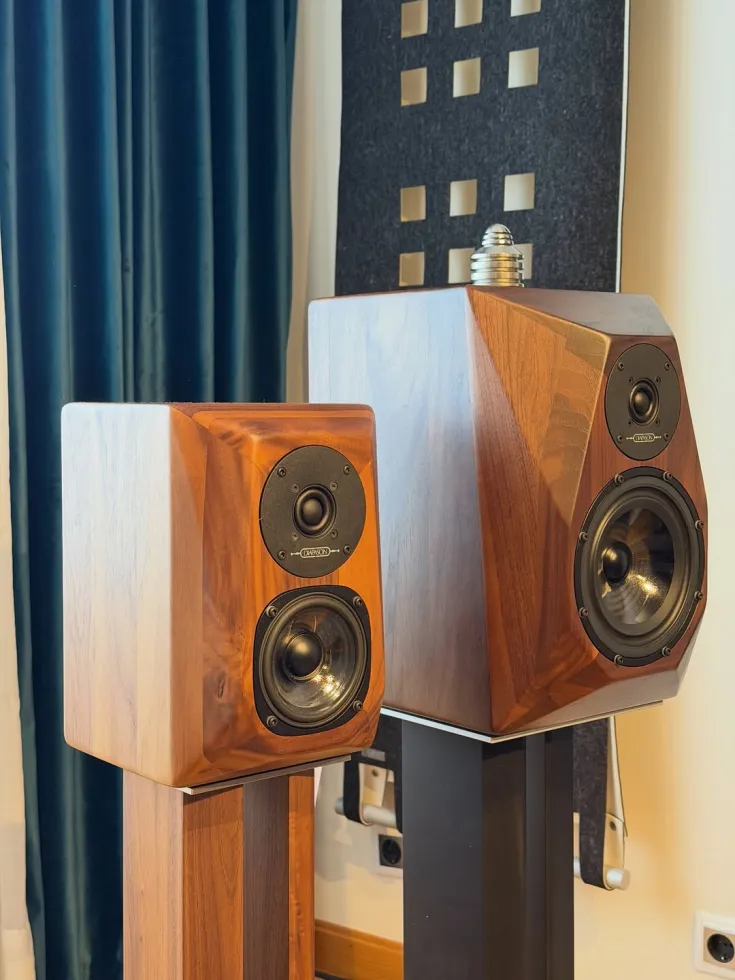
With a clear idea in mind, but needing confirmation; and using the same terms as in the world of professional soccer, I requested a product loan with an option to purchase.
Diapason Adamantes V Model 2025
The first thing I want to do is explain the name I've given the product—one you won't find anywhere else: "Model 2025." Product evolution over time is constant and continuous. Often there aren't major changes between versions, but rather small adjustments to the initial prototypes or refinements over time. Companies apply their own philosophy when deciding whether or not to publicize these modifications. Some don"t hesitate to add MK2, MK3, MK... or "version 3, 4, 5,..."
Others, however, prefer to keep it internal and not easily reveal which variation we are talking about, forcing many enthusiasts to become true detectives of product series numbering.
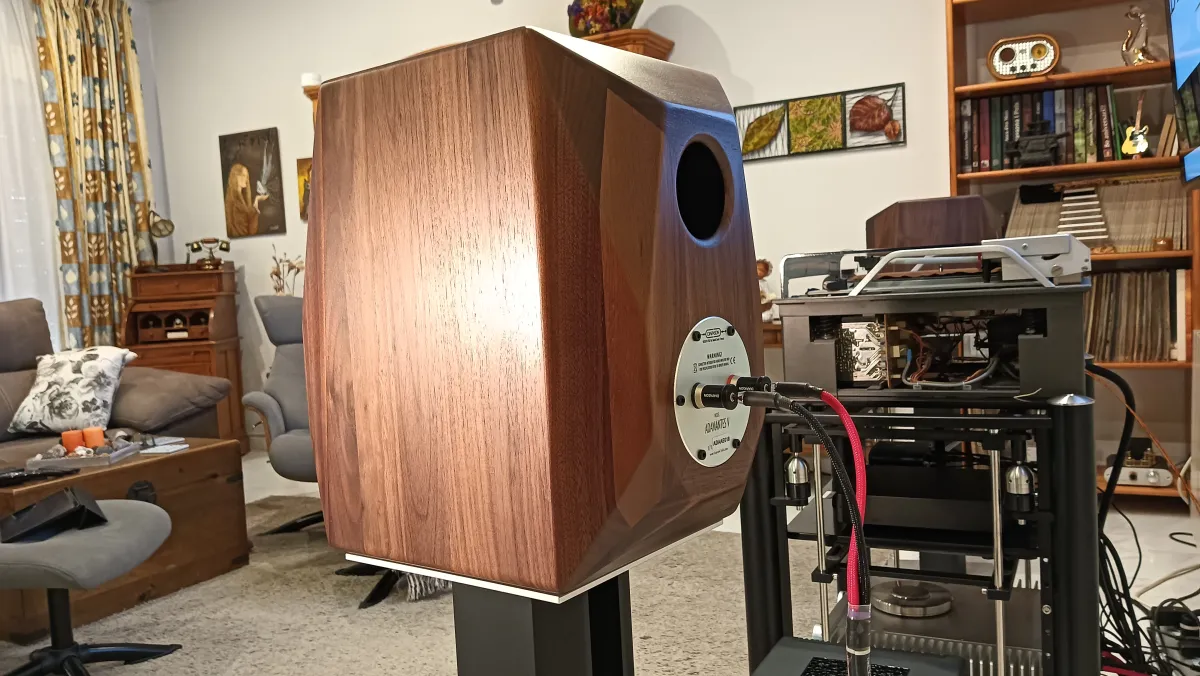
And finally, those of us who write about these products cannot evaluate a series if we only have one of the products in our hands and not all of them. Therefore (please forgive me if I have gone into too much detail), there is a need to identify the product exactly.
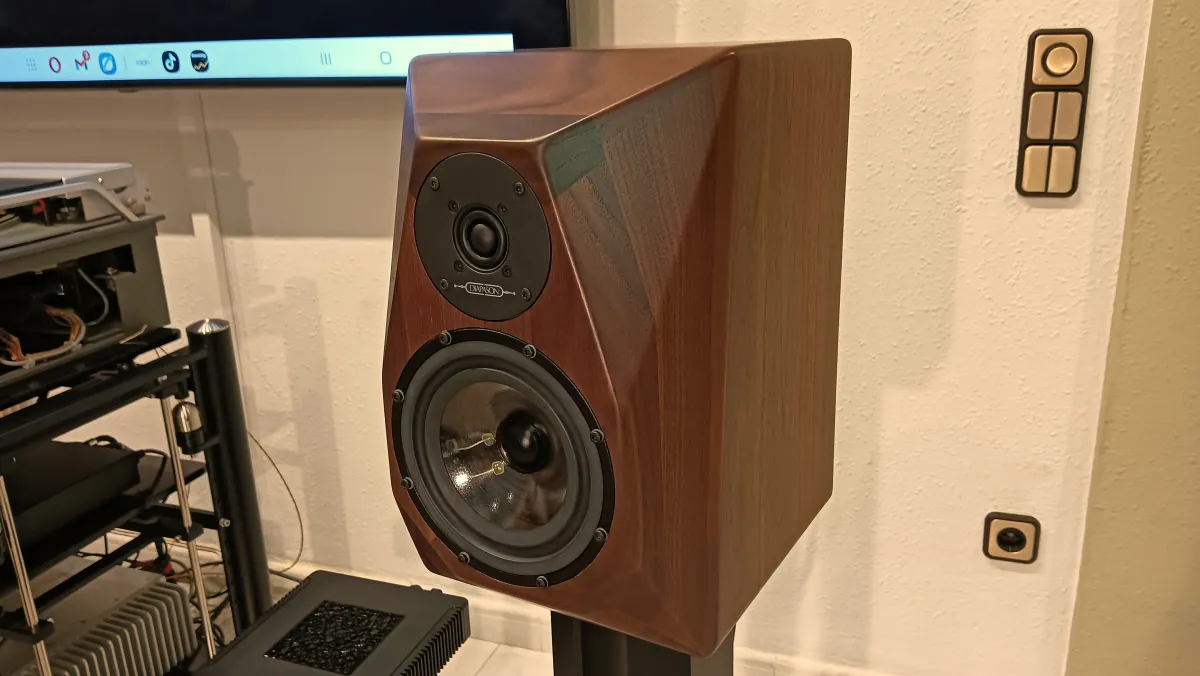
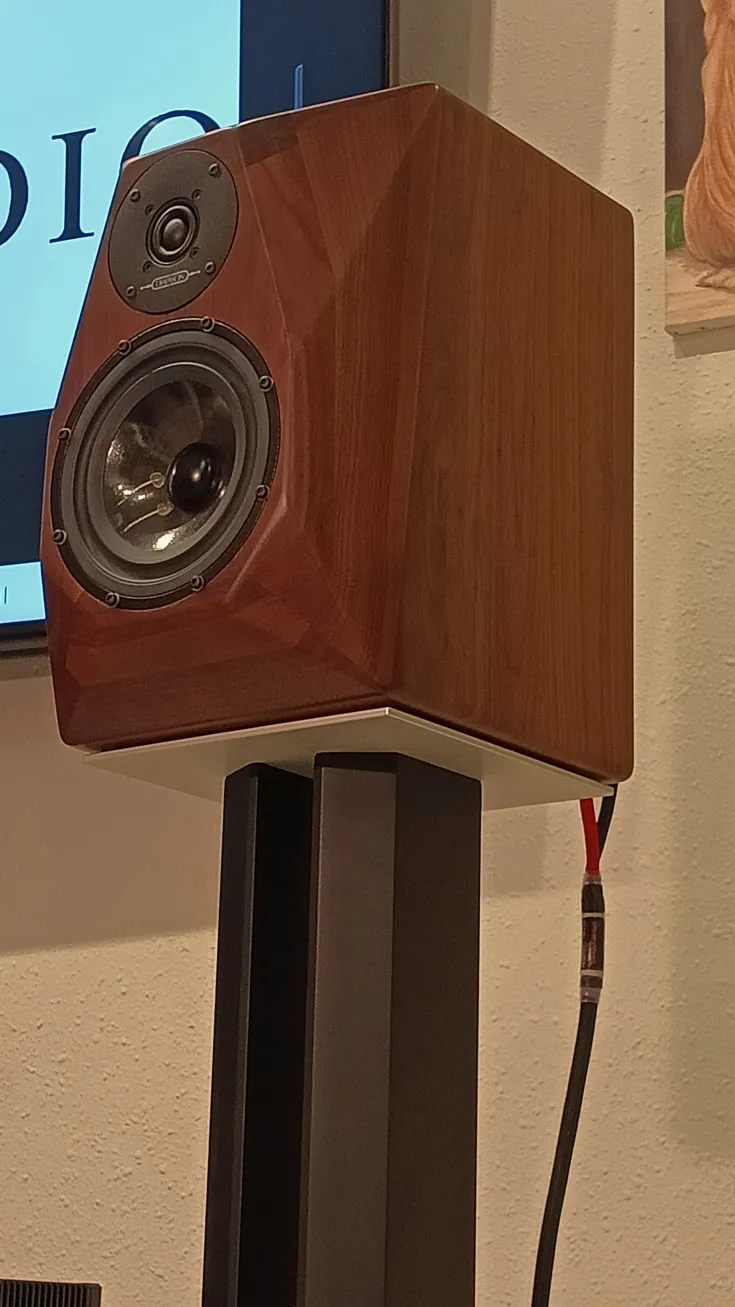
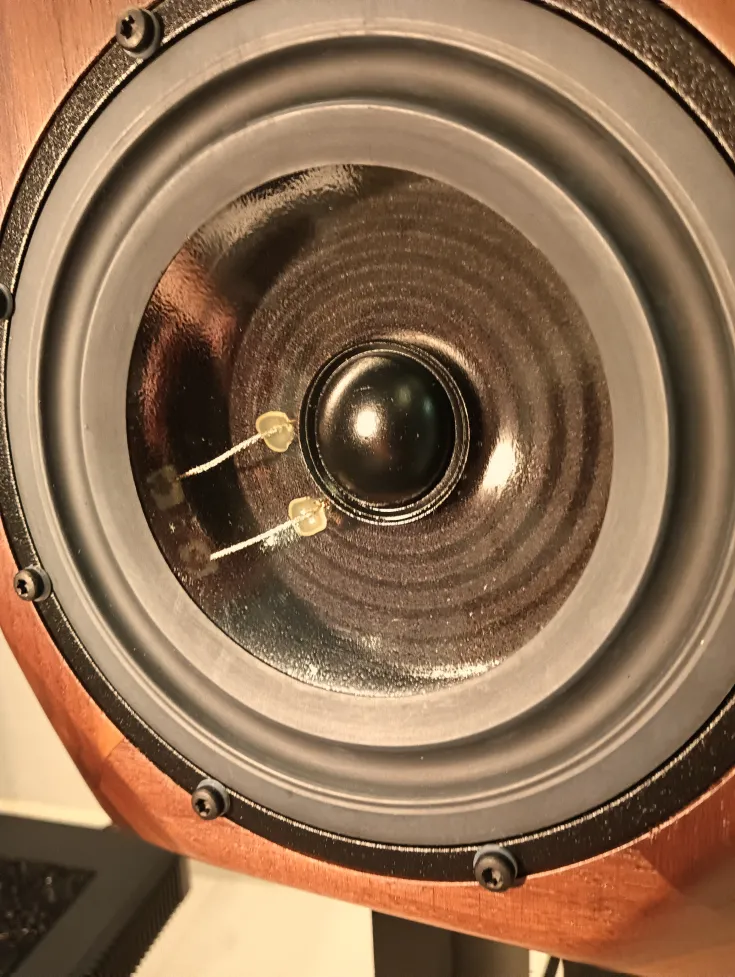
Adamantes means diamond. It is a scholarly word derived from the Latin "adamanten" and was used to describe a precious stone or a mythical, indestructible material. At Diapason, they drew inspiration from the speakers' cut design when naming this series, which began production in 1989. Beyond its undeniable external beauty—a very personal opinion—it serves to diffract the sound waves transmitted into the room in a much more controlled and subdued manner, thanks to its multi-angled structure.
The speaker enclosure consists of two perfectly fitted pieces. The front panel, where the transducers are mounted, and the rest of the enclosure, made from a single piece of hollowed-out wood. The wood used in this model is Canalleto walnut, also known as American walnut.
Tips for identifying a good sound
You've probably read countless times about the presence of instruments in the soundstage, their separation, or their positioning on the horizontal or vertical plane (the vertical plane is by far the most difficult, accessible only to expert sound technicians—when discussing a stereo system, of course).
The truth is that those of us who have been in this field for a long time have our own little book of tricks to help us with these issues. There is a marvel called: Recomposed By Max Richter: Vivaldi Four Seasons. Beyond being a different take on this classic work, with a bold and elegant remix of Vivaldi's immortal piece, there are the final additions. That's where the treasure lies. Shadow 3 and Shadow 4.
- Steps to follow:
- The room must be as quiet as possible. It won't work well with outside noise.
- Play tracks Shadow 3 and 4 at a very low volume. Turn it up gradually, very slowly. You should get a clean sound, without any room response.
- You'll notice the room response when you perceive more volume, body, and reverb in the music. If you turn up the volume very slowly, you'll notice it. Every audio system has its own room threshold based on its power. You may not be able to turn it up more than 10 or 15 percent.
- Shadow 4 covers the front in the same way, with nuances in the highs and body in the mid-lows. If your system fills the entire room in front of you, without dips or a sense of central sound gaps, your speakers are at their sweet spot and performing at their best.
A few nuances regarding what was stated earlier. Not all speakers are capable of functioning properly at low sound pressure levels; I know that. And manufacturers justify themselves by saying that if you turn up the volume, it improves; I know that. These are poorly designed products in terms of their linearity, even though they may be optimal at one of their extremes. I don't like the manufacturer deciding my listening volume; I decide that.
The Adamantes V respect my perspective, and they presented me with a soundstage in my living room that I've experienced before, though never with speakers of this size—they've always been much larger. And in some cases, monstrously larger. That is their greatness.
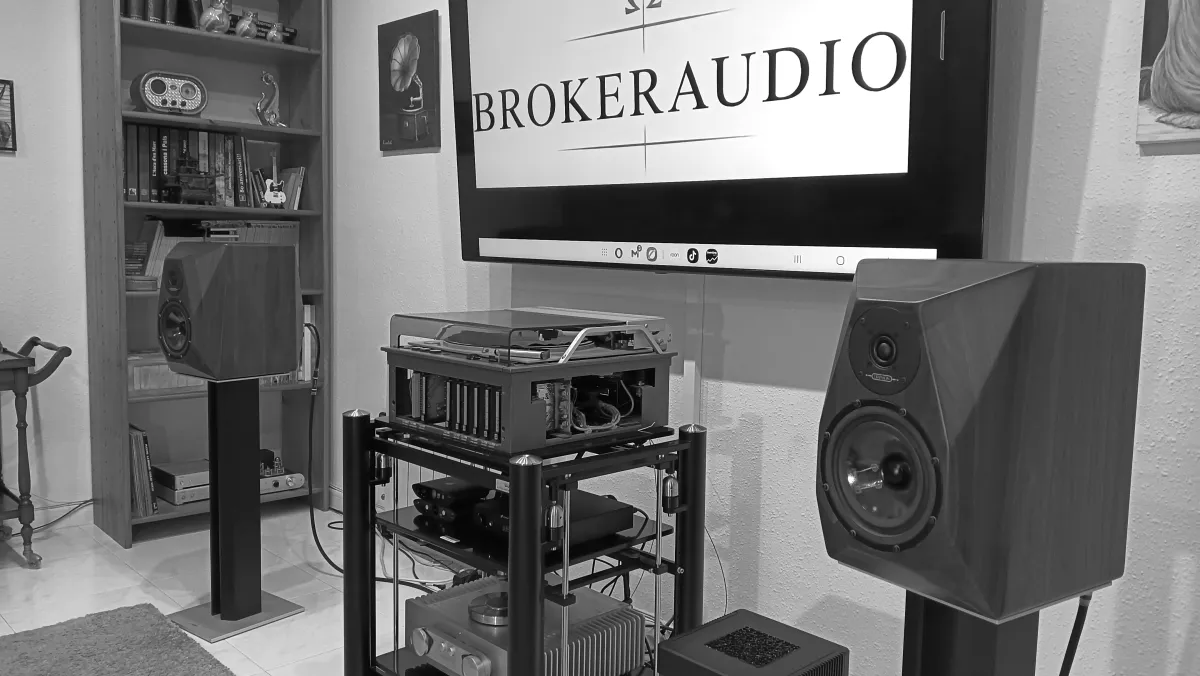
Equipment used in testing
Sound source:
» Qobuz Studio
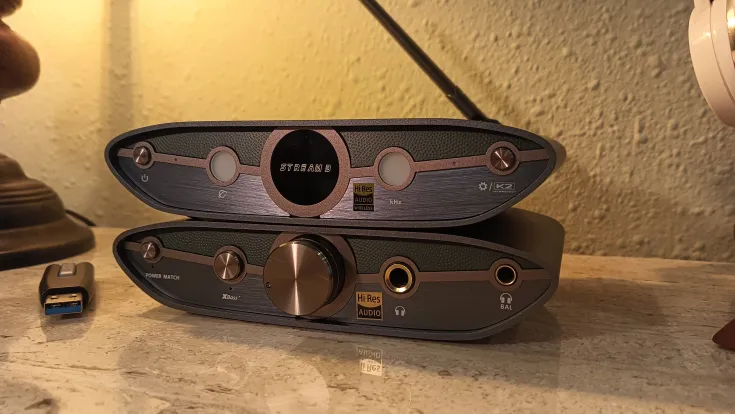
» iFi Audio Stream 3
» iFi Audio Zen One Signature
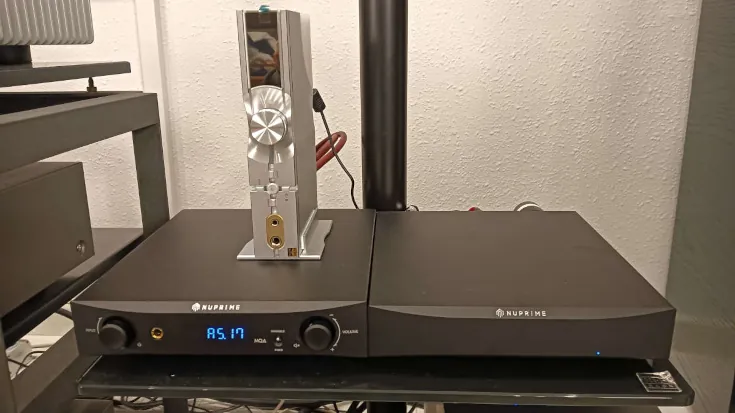
» NuPrime DAC 9X
» Roon One
Power Amplification:
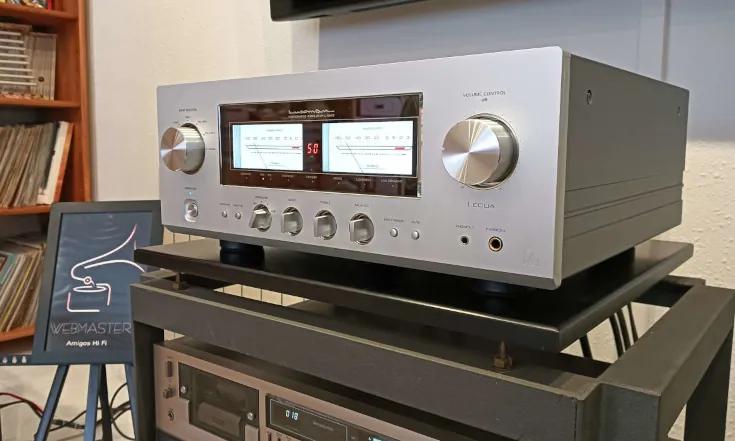
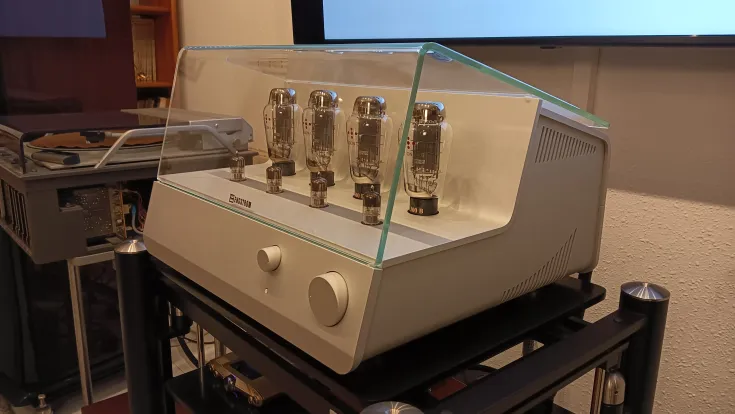
» Bow Technologies WAZOO XL
Headphone amplifier:
» Little Dot MKIV
Speakers:
» Diapason Adamantes V mod. 2025
Headphones:
» AKG 701
Cables:
» Wires4Music in wiring:
» Horus Hybrid RCA interconnects
» Evolution for speakers and power supply
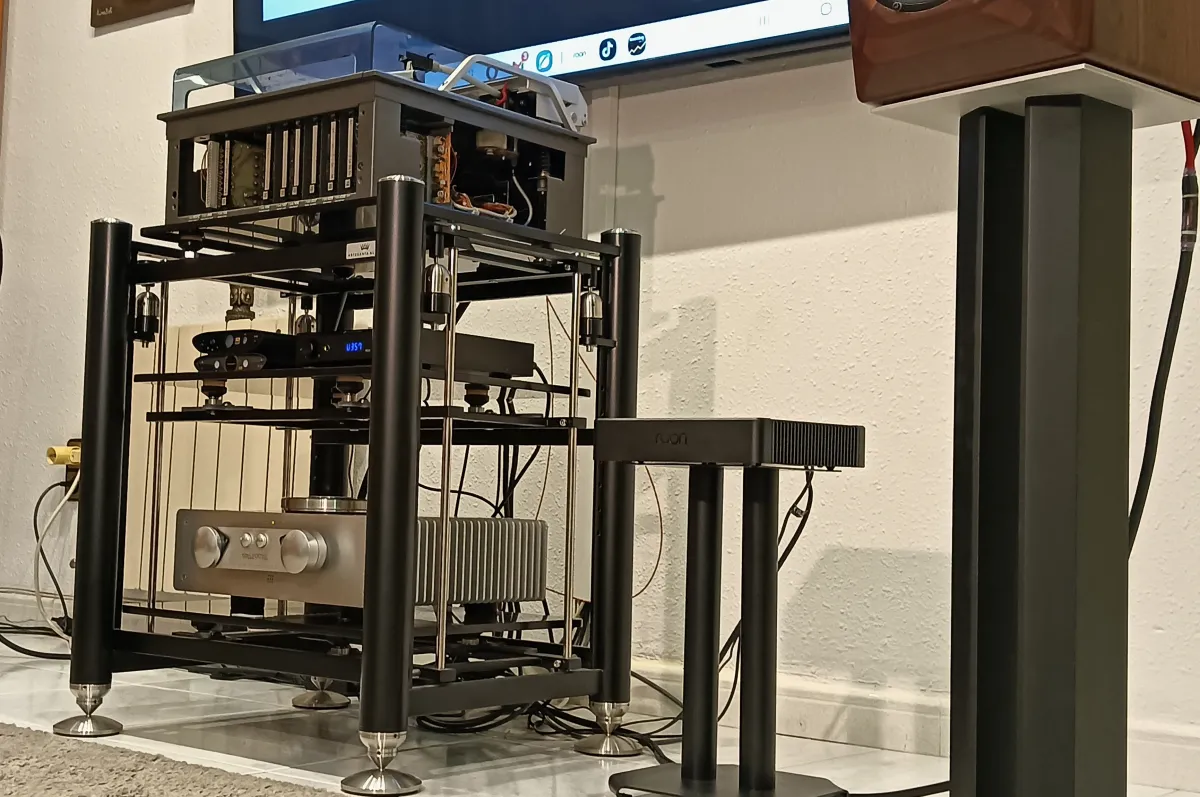
Hi-Fi Rack:
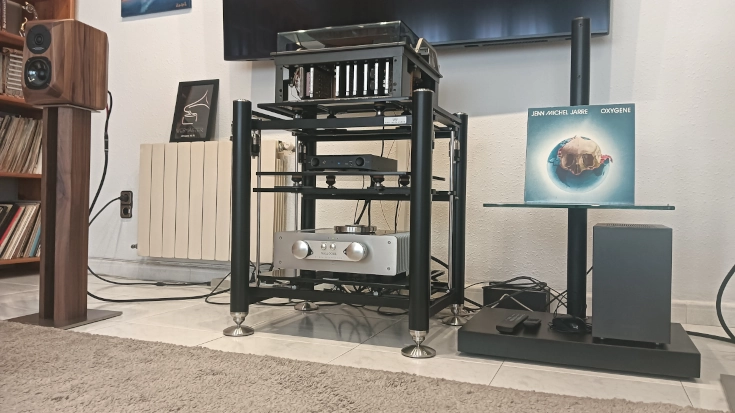
» Artesanía Audio Exoteryc Rack PRO
With Rinaldo 1731 came ecstasy

Rinaldo is an opera composed by Handel in 1711. Inspired by La Gerusalemme liberata (The Liberated Jerusalem) by Tasso. It was a huge success at its first public performance. Without going into too much detail, it is worth mentioning that this work was rewritten in 1731 and many of its leading roles were reassigned to different voices to change its sound. Rinaldo went from being a castrato soprano to a castrato contralto, Armida from soprano to contralto, Goffredo from contralto to tenor, etc. The changes were so significant compared the original work that hwv 7b (b) is used to indicate that it is the second version or, as on the cover of this album, Rinaldo 1731, indicating the year of the revision.
With the comments made earlier about the continuous wall of sound that the Adamantes ensemble is capable of reproducing with precision in the hall, we must now immerse ourselves in this work. The first instrumental section has the distinct sound of the orchestra in the pit. The music moves from bottom to top in front of you, with a slight lack of instrumental clarity due to the positioning of the instruments in the hall. Any opera lover who has attended a performance knows exactly what I'm talking about right now. The notes fill the hall from the front; it's a melody that reaches you little by little, like a glass of water that keeps filling even after it's already full. The mind relaxes, the body vibrates to the rhythm of Baroque music, with its high-pitched timbre across all its instruments and enough empty spaces to mark, note by note, its high-pitched sound, with slight descents into the lower registers, not highly valued at the time.
After nearly six minutes of instrumental overture, the recitative "De la nostre fatiche" enters the scene. The voice enters with a force that makes your heart skip a beat. It is at the forefront, projecting toward you in an expansive way. For the first time, we lose the two musical dimensions we had experienced up to this point to enter into three-dimensional sound. The voices are, literally, above the orchestra. This soundstage, in which the delineation of the two positions is defined, is maintained at all times. Intense, clear, and brilliant voices reveal a real, present body in the room. The truth of these voices, their constant physical presence on stage, and their humanity. For some speakers, reproducing the high frequencies is relatively easy; producing sounds that are credible in terms of positioning and presence is something few options on the market offer.
To wrap up and help you understand a little better just how far this musical and sonic experience (I make this distinction on purpose) took me, I'll share an anecdote. While listening to the opera, my ear was analyzing the entire sound development in the hall so I could write this article, and my body was enjoying every note. The aria best known to everyone is: "Lascia ch'io pianga", performed in this case by Roberta Mameli. Just before it, there is a recitative, also performed by Roberta, which provides a masterful introduction to the aria. It is the perfect introduction. Listening to the aria without the recitative is to miss much of the magic contained in the work. Well, here's the anecdote: my mind wandered off to another world. I was mentally lost, and my wife had to bring me back for dinner. According to her, I was at the table eating, but my mind was in some unknown, distant place. I had drifted off and hadn't come back.
The setup used here was the Nuprime DAC, to add more body and soften the peaks in the high frequencies.
Qobuz Playlist "Another World"

After spending a long time researching and testing various types of music, I've managed to create a playlist that currently consists of just 6 tracks. Their main characteristic is this: they're largely unknown to the general public and bring me inner joy. It might be hard to immerse yourself in their magic after just one listen; but after two or three, you'll be a slave to their musicality and joie de vivre.
It is precisely with this musical combination that I have been able to test the speakers' response speed to more demanding musical styles in contemporary sounds. These days, everything has to have extra body and volume. Excessive for my taste. The high-end systems showcased at trade shows and demonstrations are over the top in this regard. Singers with internal soundboxes the size of a room. Bass that goes so low it seems to reach the other side of the Earth. We've lost our balance and our sanity. Logic no longer exists, and the excesses of home theater have been polished down to sound in a clean stereo format.
The Diapason Adamantes V bring the presence of the bass from violas or double basses right before you, without overwhelming you. They're there—you notice them—but they don't invade you. They don't penetrate your body, making your stomach vibrate; instead, they're there for you to enjoy and savor. Restraint and moderation in presence and speed, with a lot of speed in the delivery. The dynamics are very high, and they let you feel the excitement without overwhelming your ears or your room—which is even worse. Provided, of course, that you have a reasonably well-prepared room with enough square and cubic footage available.
Returning to the list, the first track is a little sonic madness from an Asian artist named Bobby Kin. Rhythmic beats with guitars and Mexican-inspired elements to really shake things up. Another track is "Ondra Renda," a huge Bollywood hit. His melodic voice takes you to new heights, helping you appreciate a bit more a music that we in the West often dismiss out of ignorance. More tracks: "Mimouna" is the Mediterranean Sea. Its cultures have merged over the centuries, and it's easy to recognize the influences in the folk music of the people living along its warm shores. Don't miss it—you can listen to it here.
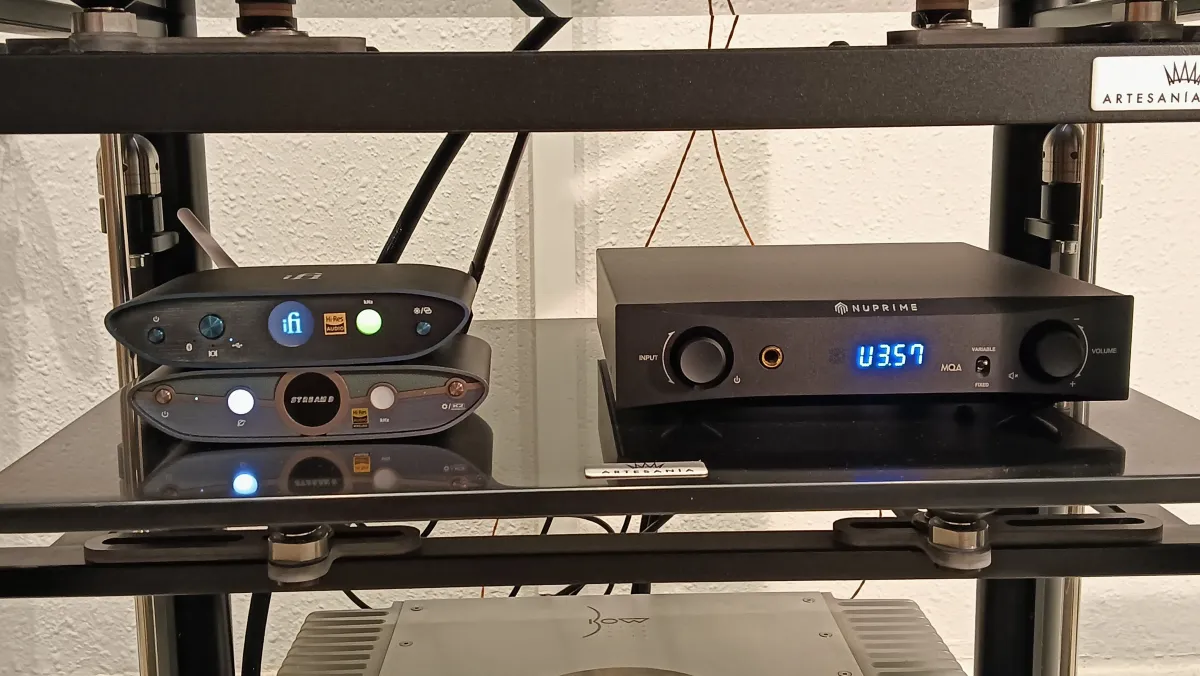
The setup used in this case was the iFi Audio Stream 3 and Zen One Signature DAC combo. The Stream 3 was configured as a Roon player.
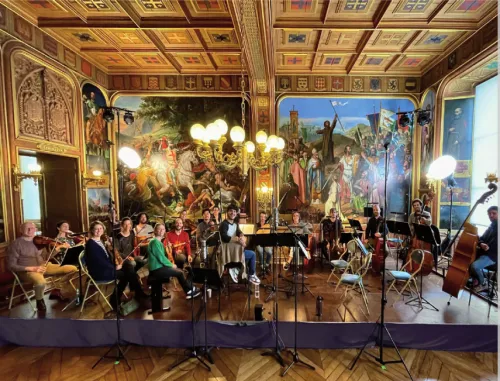
And now a little gift for the readers who have made it this far. Everything I've told you about the opera Rinaldo hides a big secret. Both the singers and the orchestra were at Heath Street Baptist Church in London. And the locations and soundscapes were created by a master of recording, Alban Sautour.
Final Conclusions
The Diapason Adamantes V should be considered more as an instrument in the room than as a music player. They bring their own personality to recordings; they are not neutral, they are as alive as the wood from which they are made.
They completely break away from the trend of high sound pressure and the coldness of a perfect but lifeless performance, achieving musical harmony in everything they reproduce; relaxing the atmosphere and creating positive energy in the environment, something I value highly.
Their beauty fills the room (a very subjective and personal opinion). Seeing them every morning when you wake up and looking at them makes you feel good and blessed. The female presence in my home is delighted with them (WAF +).
| Manufacturer's website | Diapason-Italy |
| Distributor's website | Broker Audio |
| Price | Check |
| Technical specifications | Click here |
| User manual |


More review
-
NuPrime DAC 9X
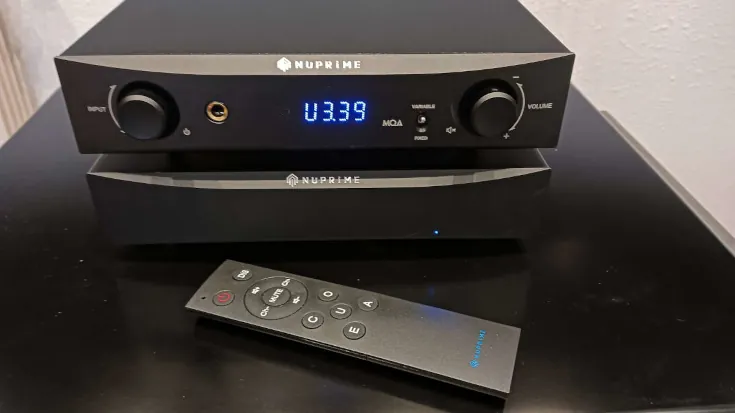
Its sound is somewhat difficult to define because it does not adhere to the usual tropes of the...
-
Technics EAH AZ80, positive evolution
Technologically speaking, this model showcases the most refined work available.
-