
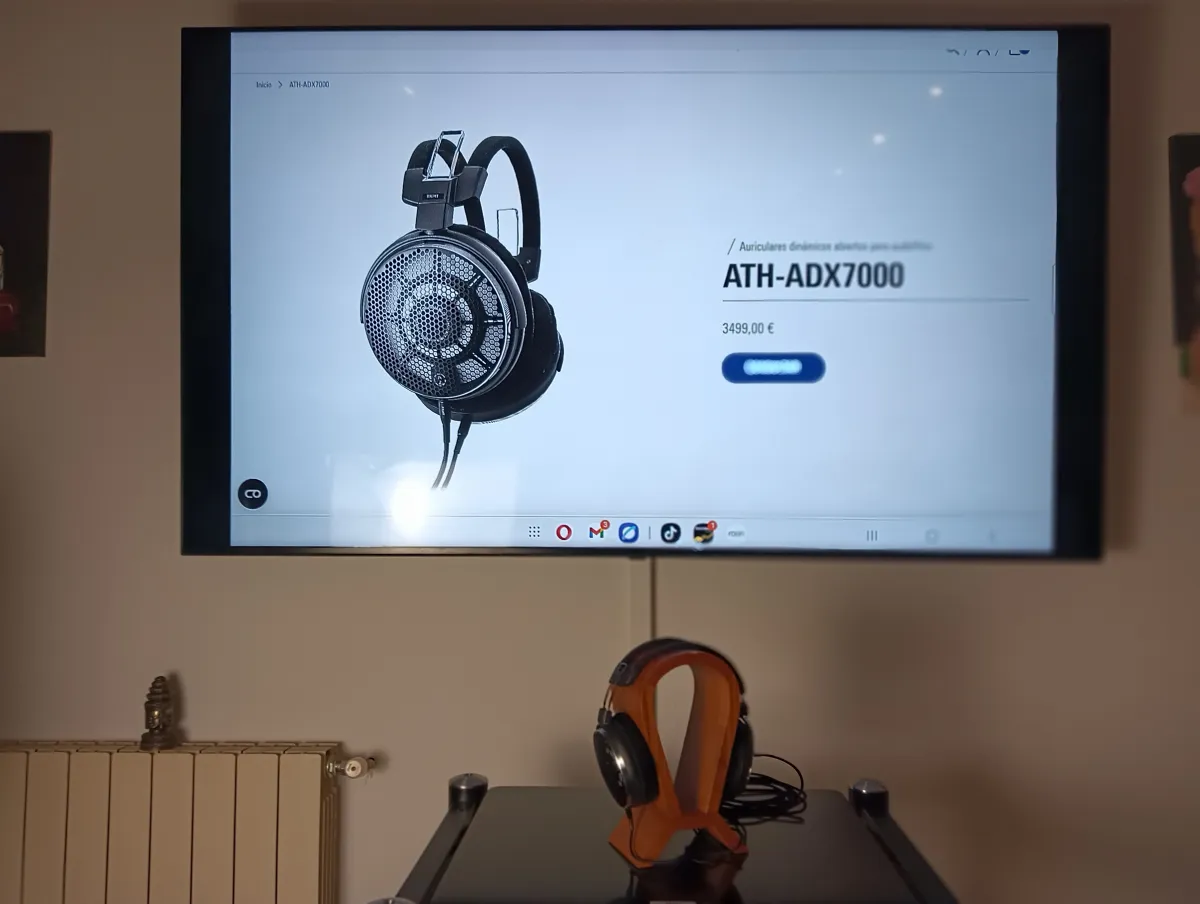
Walking around ISE 2026 and bumping into the marketing director of Audio Technica Ibérica. It had been a while since we'd seen each other in person. A coincidence. And a promise on his part: "I'll send you the Audio Technica ADX7000s, and that's all I'm saying."
At first, I imagined an improved/refined version of the ADX5000. I couldn't have been more wrong. The ADX5000 headphones are the ones I've liked the most out of all the ones I've tried so far. Their sound profile is my sound profile. Someday the stars will align in the sky and I'll be able to get my hands on them.
I'll just tell you one thing about the ADX7000: I listened to a few seconds of Pink Floyd and my head exploded. I didn't get it.
Audio Technica ADX7000
For those who don't know, Audio Technica offers products that are off the charts, both in terms of product category and price. To put it simply, we're talking about the HPA-KG NARU and the AW-KG NARU headphones, with a combined price exceeding $100,000 USD. The ADX(x)000 series has always maintained a balance of quality and price at the top of the range without being the "crazy" out-of-the-box offerings.
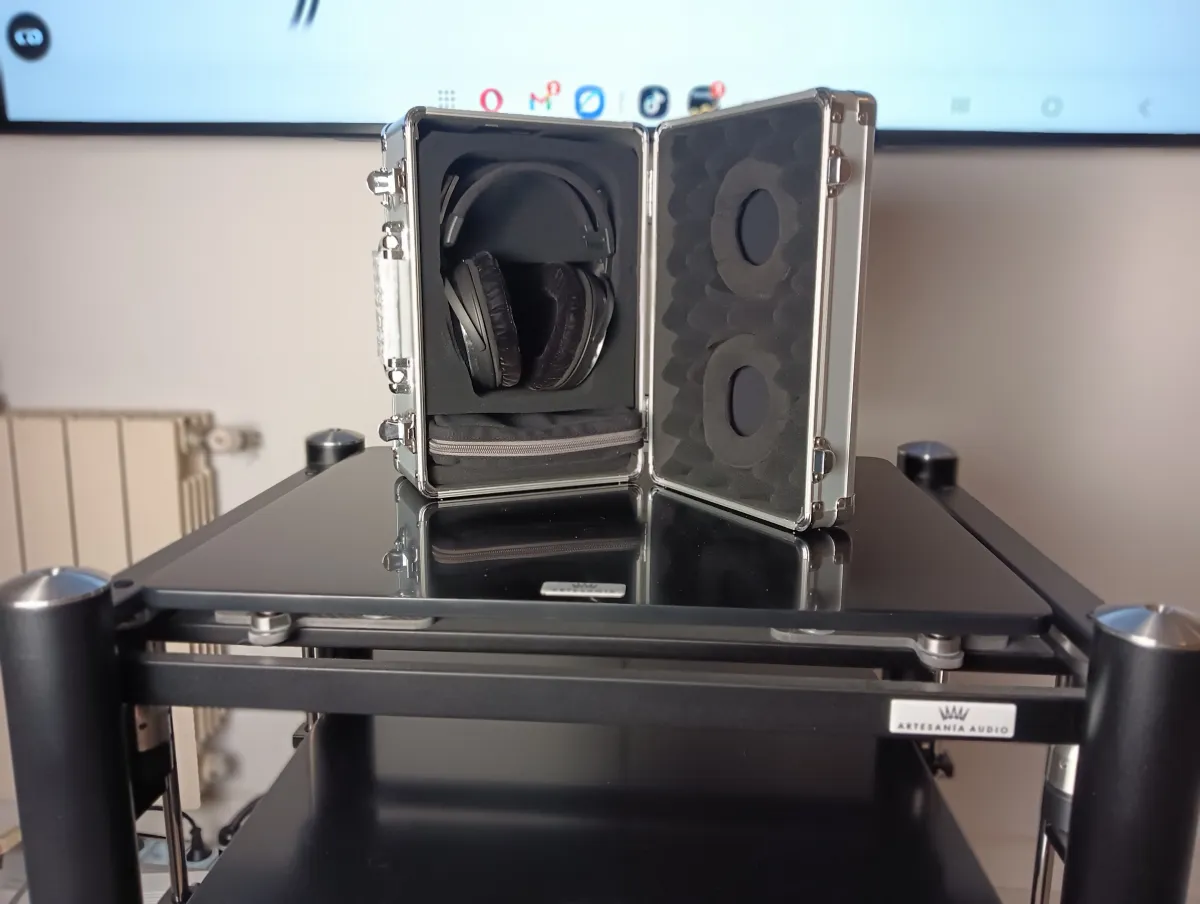
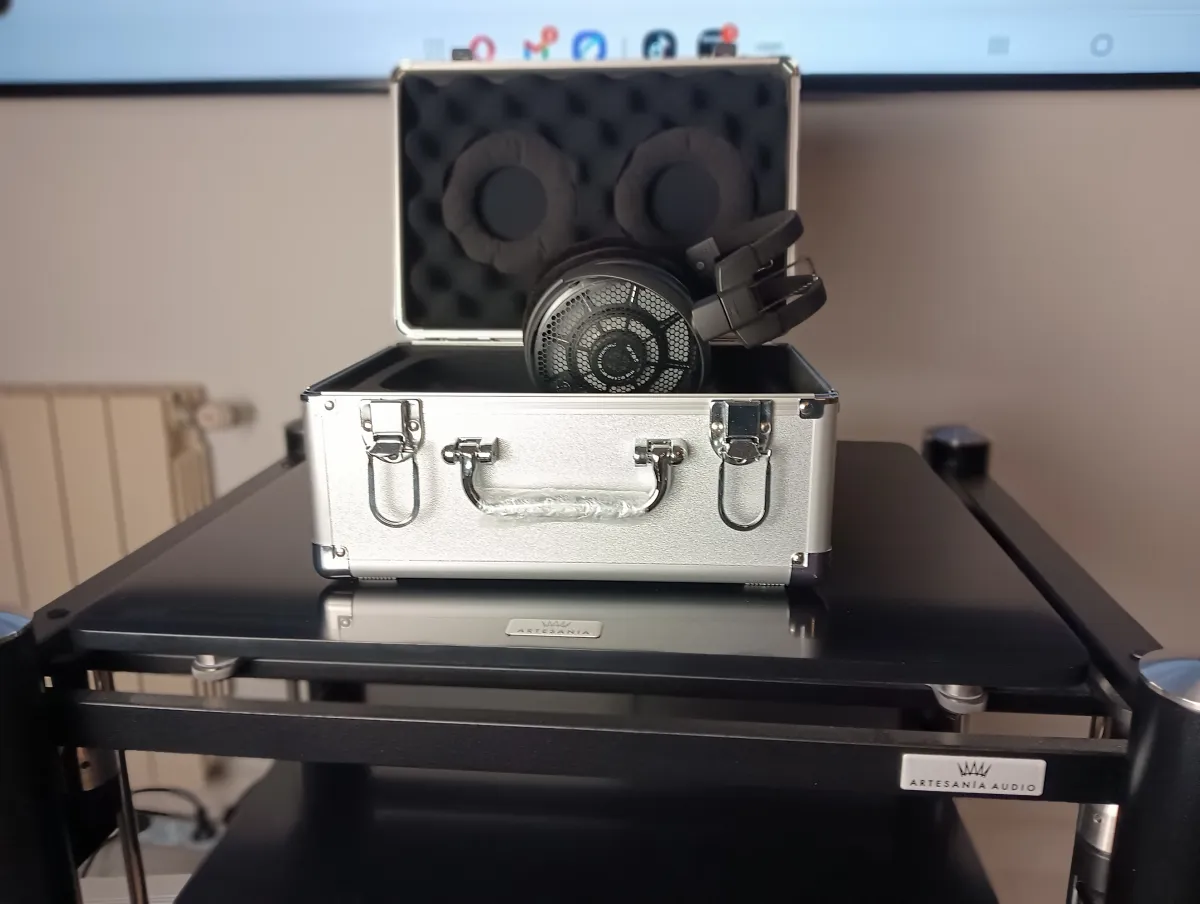
The product comes in a metal case with a professional finish. The case is meticulously crafted, with every detail designed to provide both visual appeal and genuine protection for the headphones and accessories inside.
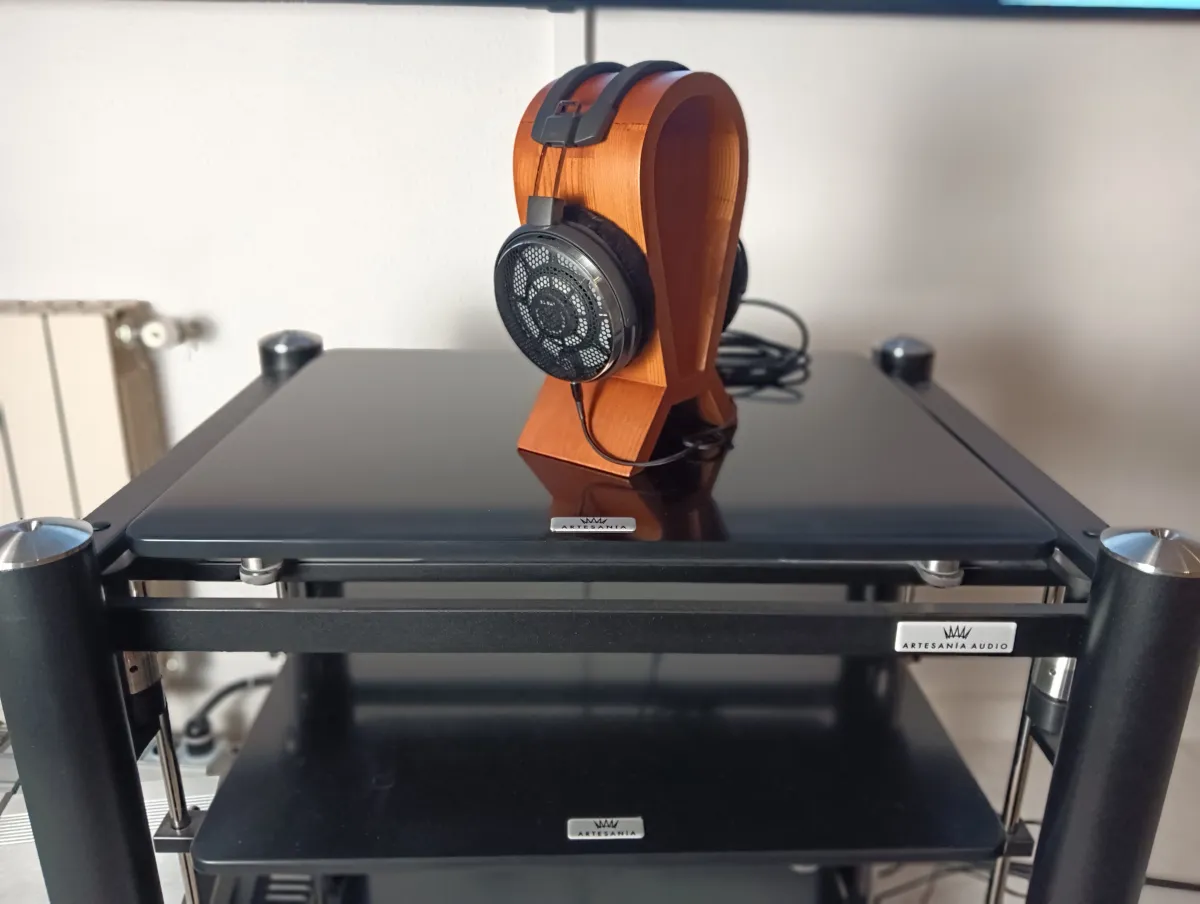
One of the problems or objections some enthusiasts have regarding the use of headphones is that they fall off, are heavy, or are uncomfortable. Well, they'd better start thinking of other arguments. The weight is 275 grams without the cable. The first thing I did was put them on (without the cables) and start making jerky, uncoordinated movements—in other words, the closest thing to dancing that a hopeless case like me can manage. They're so light thanks to their magnesium frame. Furthermore, this material has some very interesting properties when it comes to dampening diaphragm vibrations. Honestly, what I can personally attest to is that their light weight makes them a joy to use, even compared to the ADX5000. By moving my head aggressively from side to side, I managed to dislodge the ADX5000; but with these ADX7000s, not a thing. And to top it off, if we use the Alcantara ear pads, beyond their sound performance, we reduce the weight by an extra 10 grams. Crazy—these Japanese are really crazy.
I'm adding the official video from the manufacturer so you can see the product itself in more detail:
The main features of the product are:
Type:
Open-back dynamic
Driver Diameter:
58 mm
Frequency Response:
5 to 50,000 Hz
Sensitivity:
100 dB/mW
Impedance:
490 ohms
Weight:
Approx. 275 g (HP-ADX7000: velvet ear pads) Approx. 270 g (HP-ADX5000: Alcantara ear pads)
Connector:
A2DC female connector
Included Accessories:
・Cable (3.0 m/6.3 mm (1/4 inch) gold-plated stereo plug) ・Balanced cable (3.0 m/XLR-M (4-pin) connector) ・Ear pads (HP-ADX5000) ・Hard carrying case ・Cable pouch
Spare parts/items sold separately:
・Cable ・Balanced cable ・Ear pads (HP-ADX7000, HP-ADX5000)
At this point, I would like to highlight a detail from the information shown above. The specific ear pads for this model are the HP-ADX7000 velvet pads, though the Alcantara pads from its predecessor, the HP-ADX5000, can also be used.
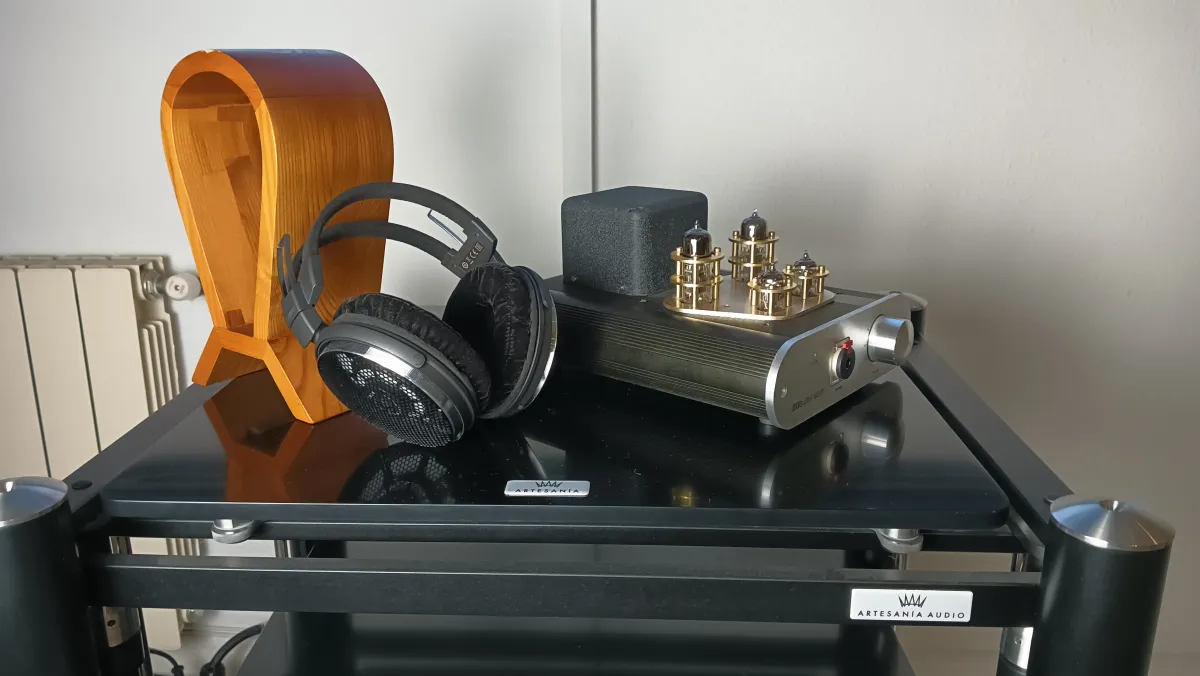
Little Dot MKIV + Audio Technica ADX7000
I like to test things over and over again, even if they seem unnecessary because they're obvious, so I can continue to assert that it's absolutely pointless to have high-end headphones if we don't use a headphone amplifier of a similar or comparable caliber.
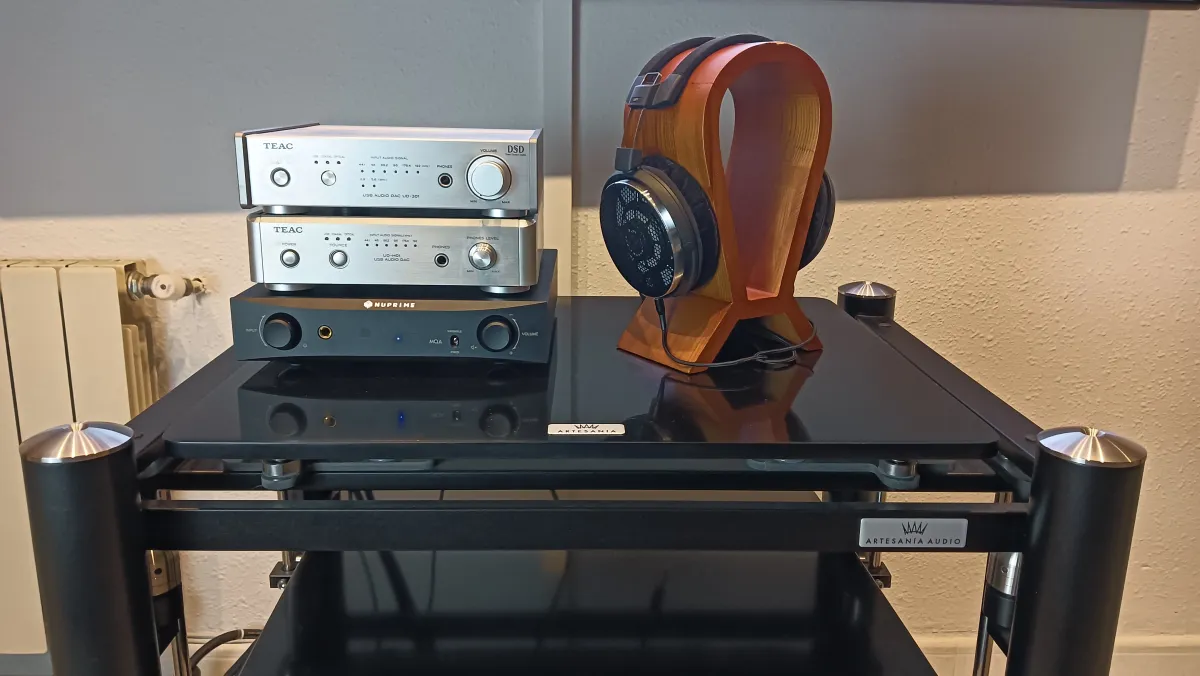
I initially connected the headphones to the headphone outputs of my two TEAC DACs, which are reputable brands, and the result was very modest. The music and its presence were discernible and finely rendered on the soundstage, though lacking any real weight. It lacked the intensity and muscle to demonstrate what's really inside this casing—so lightweight yet so powerful.
I spent half a week of dedicated listening to better distinguish and refine the changes that would occur when adding the Little Dot to the mix.
Connect the Little Dot MKIV, wait a minute for the amplifier to stabilize, and... magic.
Now we can get down to business.
Equipment used in testing
Sound source:
»NuprimeDAC 9X
» TEAC UD-301
» TEAC UD-H01
» Roon Nucleus One
» Qobuz Studio
Power Amplification:
» Little Dot MKIV
Headphones:
» Audio Technica ADX7000
Hi-Fi Rack:
» Artesanía Audio Exoteryc Rack PRO
Preliminary Considerations
Like all of us who write or make videos, we have our little quirks and personal preferences. The important thing is not to confuse our own preferences with categorical statements. For this reason, I refined the sound obtained with the ADX7000s by primarily using the TEAC UD-301 DAC over the NuPrime DAC 9X. The music played is the sum of its parts— we all know that. But what you might not consider is that the same device can add value in one configuration and detract from it in another.
Music Speaks
And if you have Qobuz, you can listen to it yourself at this link, by selecting Amigos HiFi.
I have a pair of open-back dynamic headphones in my hands, and I"m playing the worst possible music for them: "Way Down Deep" by Jennifer Warnes. The extreme bass in this track, designed to showcase high-end audio systems, is a real headache for open-back dynamics. Usually, their sound is thin, lacking punch or impact, and tracks like this come across as completely lackluster. But this is different. The bass drum is wide, very wide, and the punch or impact comes very close to that of closed-back headphones. The resonances you hear are those of the recording itself, since the open design of the drivers doesn't generate reverberation; it's all clean. I'll have to start thinking about how to define a sound that has punch yet lacks the pressure typically associated with it. It's like getting punched in the face, falling to the ground, and realizing nothing actually hit you.
I sensed this right from the start, when I was talking to you about Pink Floyd, but now, with all the nuances and details, it becomes overwhelming. From my videos, you'll see that I'm not someone who smiles much. However, when something surprises me, I can't help but smile silently. The child inside me wants new things and wants to disrupt my pathological calm. He wants action, and this gives you a good taste of it.
The track "Despacito" performed by 2 Cellos showcases much of the richness this product has to offer. The wood speaks in a way I've never heard before. Unlike other systems, where the sound impact and pressure on the listener take center stage, here it's all about the detail. The detail of everything, with no dominant element drowning out what lies beneath. After every beat, you hear the instrument's nuance, its lament, its accompaniments, its strained strings. Music—my God, this is music!
"Karma Police" by Radiohead serves to show you another side of the same music. The sound palette of these headphones is clearly warmer, smoother, and more tube-like than their predecessors, which were much brighter and more piercing. Here we temper the character of this music, making it more approachable and less strident than in other setups.
"Casta Diva" performed by Montserrat Caballé. For everything I've written so far. For what you've read up to this point. You all know that these two elements—the chosen music and the ADX7000 headphones—are its ultimate embodiment. All the pieces fit together, and tears well up as I can do nothing but trace in the air the notes floating in my mind, while my heart beats to the rhythm of the chorus and happiness seeks the quickest, most direct path to express itself. It is love for music. It is love for music reproduction. Addicted to auditory pleasure.
Audio Technica ADX5000 vs Audio Technica ADX7000
You've probably heard or read me say many times that there are many worlds, many musical nirvanas, and they're all good and valid. I don't believe in the perfect sound or the end of the road. All paths come to an end; the only important thing is knowing which one is yours.
When something surprises me, I react like a fan watching their team score a goal, a point, or a basket. My body shudders, my eyes widen, and I take a deep breath. I mentioned it at the beginning: what I thought would be a natural continuation of the previous product turns out to be something very different. The ADX7000 isn't an evolution; it's a revolution of the concept. They are two distinct products with similar names. The sound difference between them is so vast that they might as well be different brands in direct competition. I can imagine endless wars on internet forums between fans and detractors of each. In a world as polarized as today's, it seems almost impossible to enjoy the alternative paths to ultimate acoustic bliss.
The ADX5000 is the musical scalpel that mercilessly dissects our favorite tracks from our go-to bands. The music becomes ethereal, floating in the air, with miles of separation between the instruments (this is a bit of an exaggeration, but it was necessary to fully grasp the concept) . The instruments emit their delicate nuances without blending into one another, allowing you to follow each of their vibrations. If you have a solid-state amplifier in your main system, this is the headphone for you.
The ADX7000s are more musical, in the commonly accepted sense of the term, meaning that the instruments sound like a real, tangible entity. The music envelops you, blending all the nuances of the various instruments with a sound reminiscent of tube amplification. The soundstage lacks the previous breadth, but it becomes three-dimensional. You can place the instruments with considerable precision along the three reference axes. If you have a tube amplifier in your main system, this is the headphone for you. Furthermore, we can accentuate these characteristics—especially the presence of bass—by using the Alcantara ear pads. They add a nuance and an extra touch of presence, but at these levels, it's all about these small details.
Final Conclusions
Although theoretically they are the evolution of the ADX5000, I honestly don't think so. They have such a distinct personality that they would need other models to be compared to.
Their technical specifications can be easily confusing, as we are dealing with headphones sculpted from magnesium that possess all the properties of exotic woods. Their unique way of handling lower frequencies and their responsiveness will make you rethink your ideas about what it means to own open-back dynamic headphones.
There are many paths to musical nirvana; at the end of one of them lie these Audio-Technica ADX7000s.
 |
 |
|
 |
 |
 |
 |
|
|
| Manufacturer Website | Audio Technica |
| Distributor Website | Audio Technica |
| Price | €3,499 |
| Technical Specifications | |
| User Manual |
More review
-
NuPrime STA 9, Class A/D
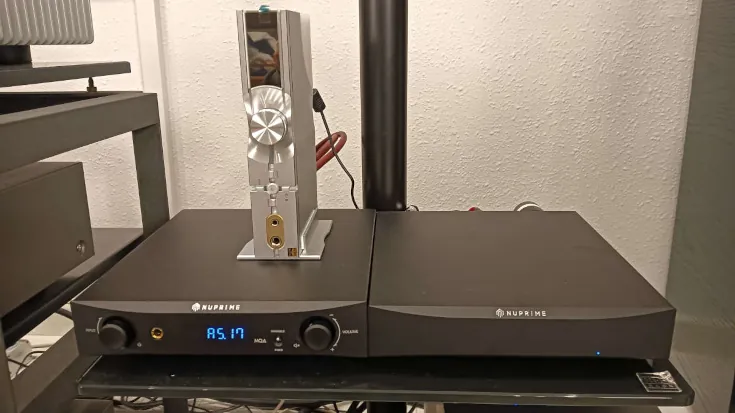
The NuPrime STA 9 could be your gateway to reference-quality high fidelity.
-
Diapason Adamantes V, listen to your heart
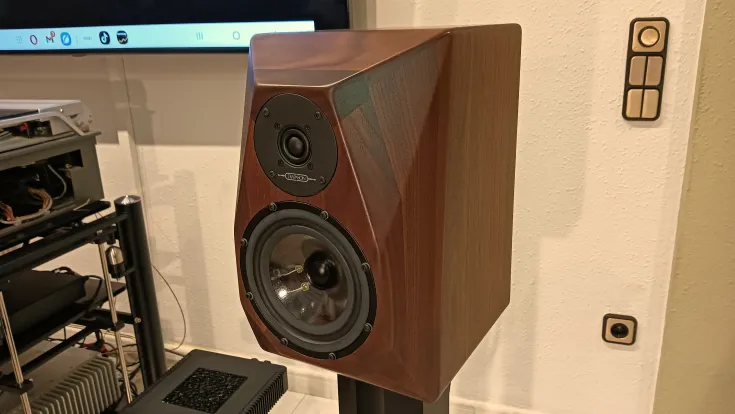
The Diapason Adamantes V should be considered a concert hall instrument
-
Primare i25 Prisma DM36/SM35: The Components That Make a Difference
Primare designs its products with a clear vision; they are upgradeable and modular.