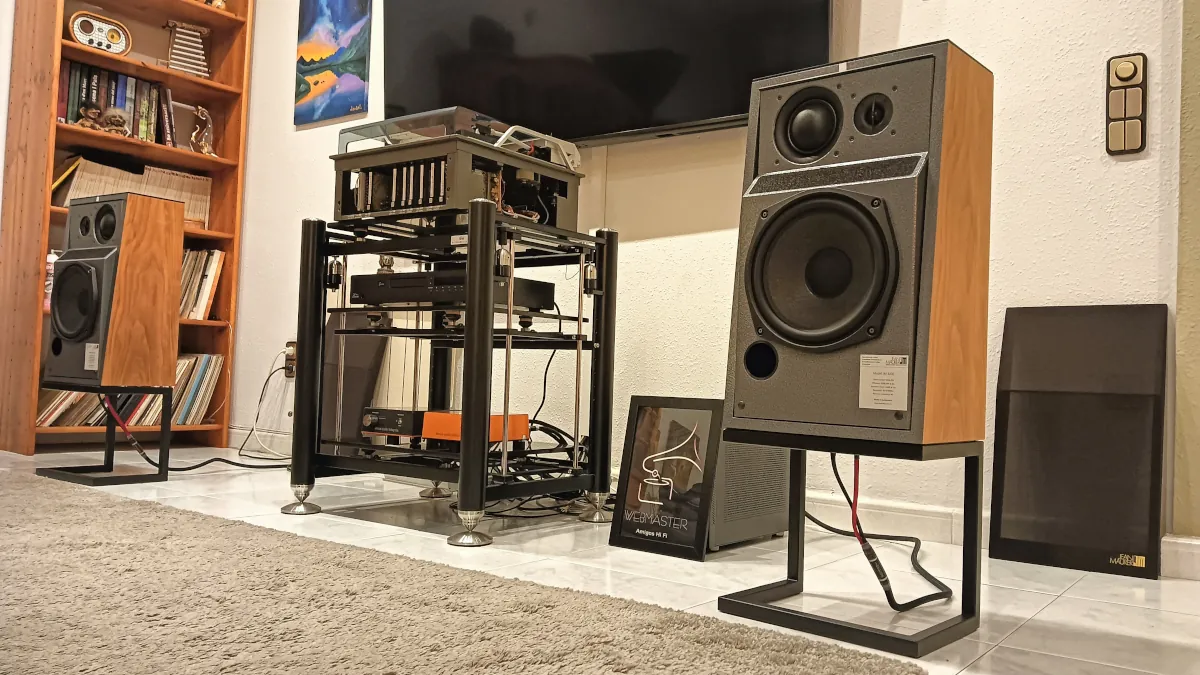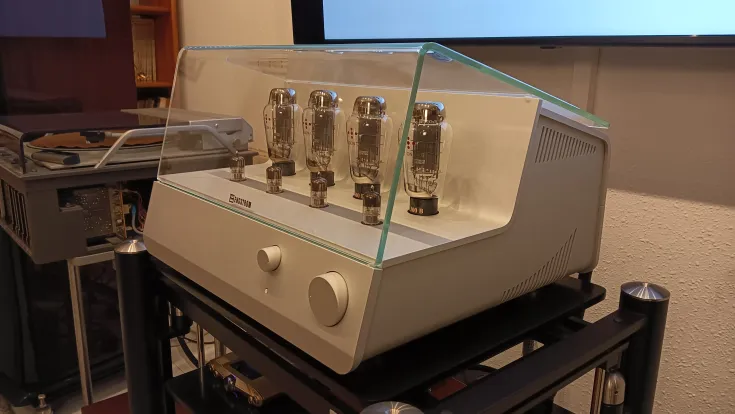
Perfect Stranger

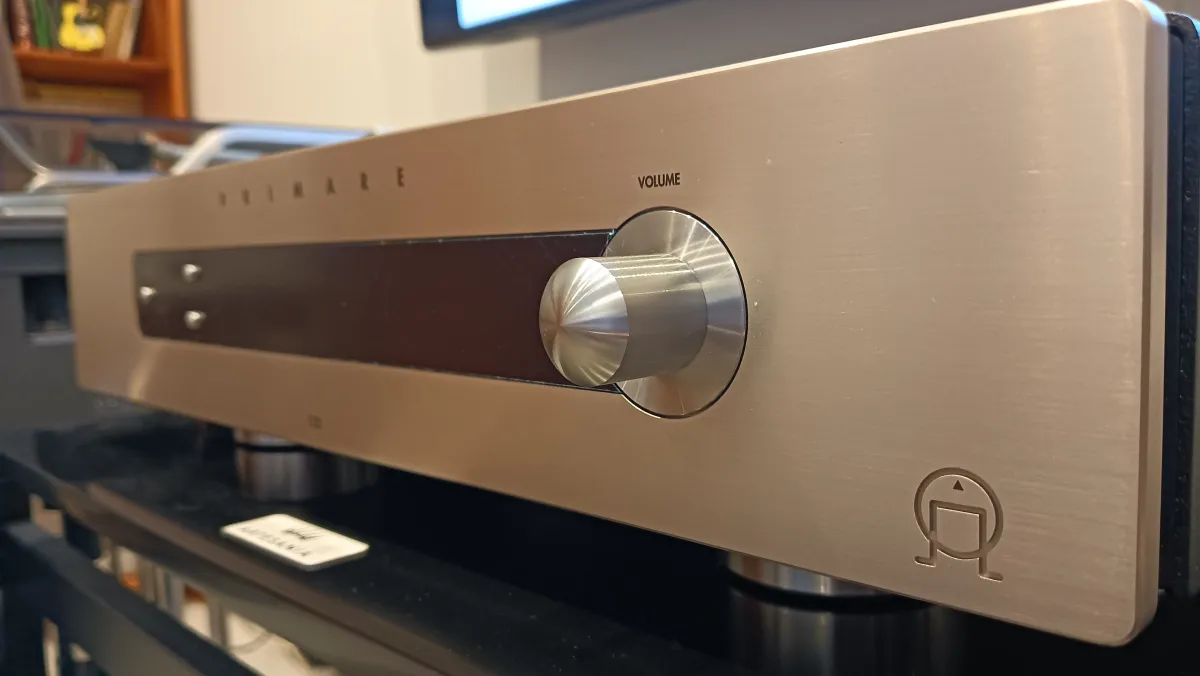
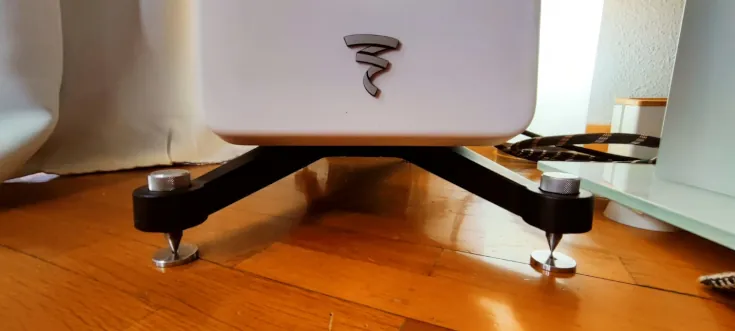
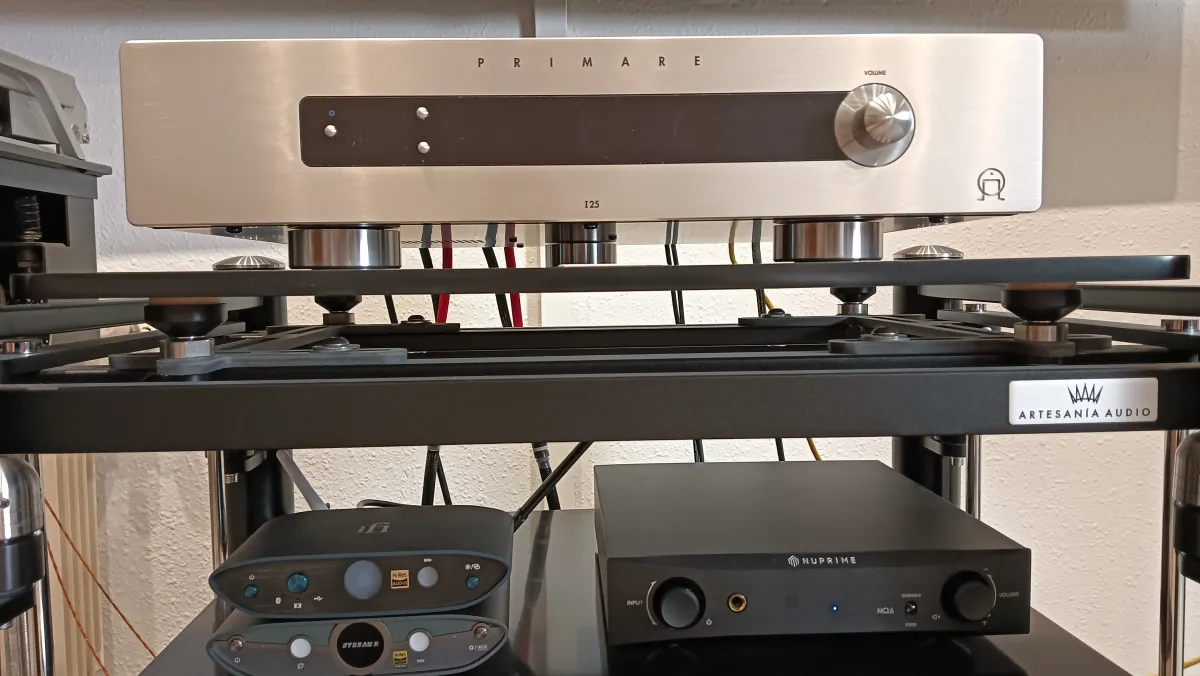
Many, many years ago, in an early version of Amigos HiFi, we published the work of Juan Pablo Montero (R.I.P.) on the development of a rack consisting of only three support points. Topics like mechanical decoupling were still in their infancy at the hobbyist level, and industrial work was limited to large machines that generated significant vibration transmitted to the floor. However, microvibrations in high-fidelity audio were not considered, as it was believed they either didn't occur or were so insignificant that they weren't worth addressing.
Why am I talking about this now? Every time I see a hi-fi component using just three support points to improve the unit's mechanical decoupling, it comes to mind, and I'm sharing it with you. This isn't written by artificial intelligence, but rather based on years of experience in this ever-changing and, at times, somewhat irrational world.
Details That Define an Idea
When I opened the box, I found something inside a blister pack that looked like an ink marker or something similar. I didn't quite understand its purpose, so I set it aside for later. Later, while reading the instruction manual—which I always read—I discovered that it was actually something simple, yet very useful: a power line phase finder. If you have multiple components in a music system and they aren't all properly phase-aligned via the interconnect cables—such as RCA or XLR—you'll generate electrical noise that will ruin the musical silences and introduce an annoying 50 Hz noise signal.

This is Primare's second feature designed to preserve sound quality and enhance the listening experience for its customers as much as possible.
Let's move on to another feature that I consider very important. Every day, more and more digital components are added to our music systems; consequently, the number of Ethernet cables needed to power them all increases—or, as Primare has done, a network input/output can be installed. So, with just a single cable connected to the Primare, you can route the signal out to another connected component. In my case, the signal enters the Primare i25 Prisma first, and the output is routed to the Nucleus Roon.
The Digital World Stands Alone, DM 36
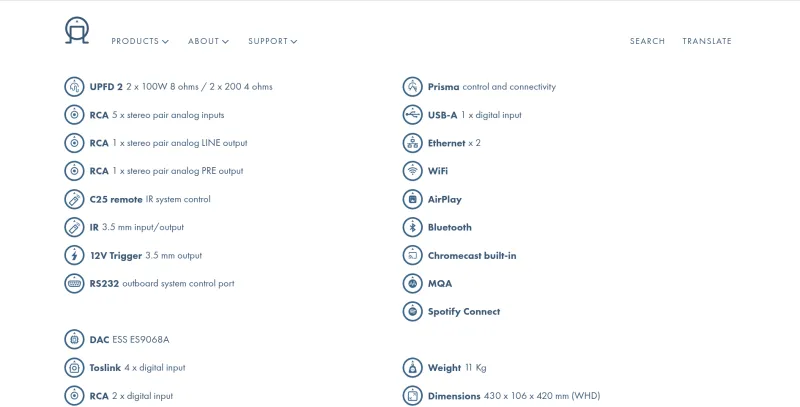
We need to keep in mind that our Primare I25 is a Class D integrated amplifier featuring the company's proprietary UFPD 2 technology; more information about it can be found at this link (here). A digital expansion card can be added to it, featuring multiple digital inputs and an ESS ES9068A DAC. If we look at the DAC's technical specifications (here), we notice something very important that defines its natural market niche. What am I talking about? Nothing more and nothing less than a microphone bias controller. In other words, this DAC was designed for the professional world of recording studios, although today we can find it in other applications in the home audio sector. But that's not a bad selling point. I'll delve into the sound character it produces later; for now, let's leave it at that.
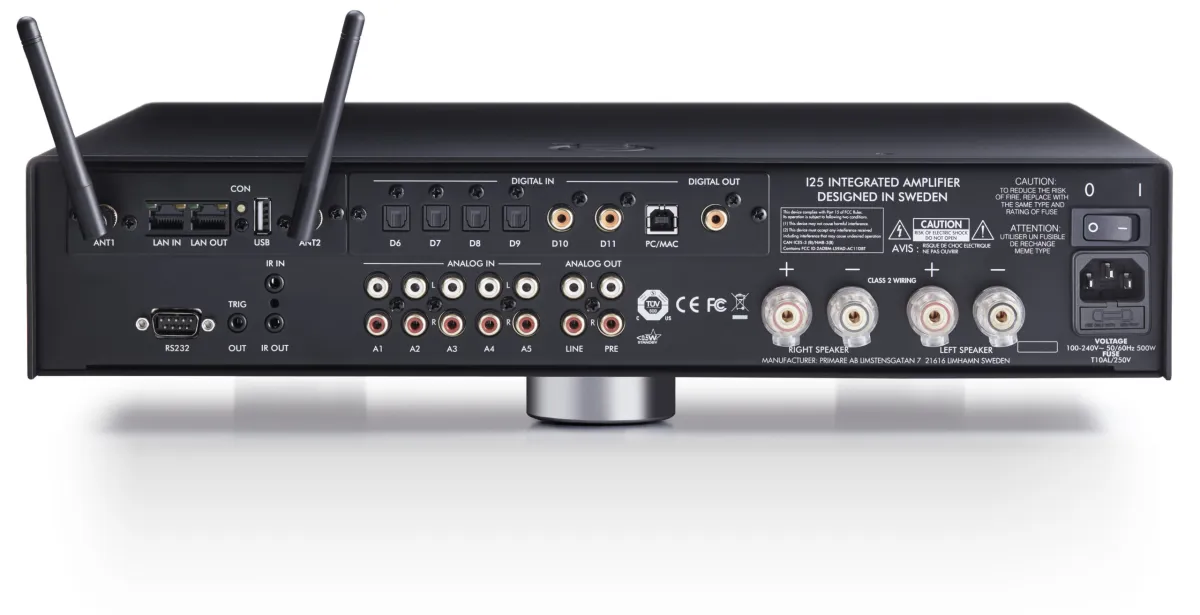
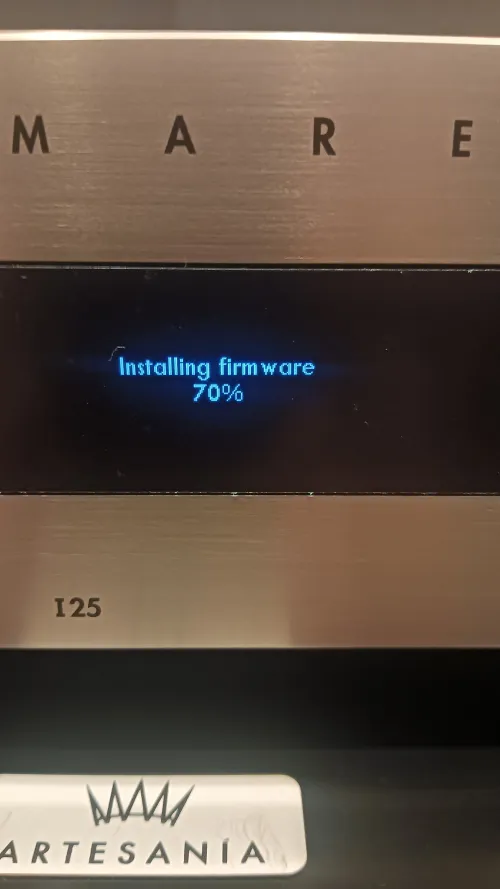
I'd like to highlight another small but significant point to keep in mind. The amplifier's digital section consists of two boards; one manages the local network input/output, Bluetooth and Wi-Fi antennas, and access to digital storage media—whether a USB flash drive or a hard drive—and is called the SM35 Prisma.
The other board handles the digital audio inputs and outputs. These circuits are kept separate to minimize interference and electrical noise between them as much as possible.
Controlling the Primare via the Remote Control
Here I need to clearly distinguish what we might call day-to-day operations—that is, power on/off, volume, selecting an input, etc. In this context, it's just like any other component on the market—nothing more, nothing less. Everything works, and it works well.
When it comes to advanced functions—such as managing certain aspects of the amplifier's fine-tuning settings—I didn't find the process intuitive for making small adjustments; I had to constantly refer to the manual, and the interface wasn't very user-friendly. Admittedly, it's difficult to do things with such a small control screen, but other companies have developed more user-friendly solutions. This is a friendly suggestion for the next iteration of the product: improve this aspect.
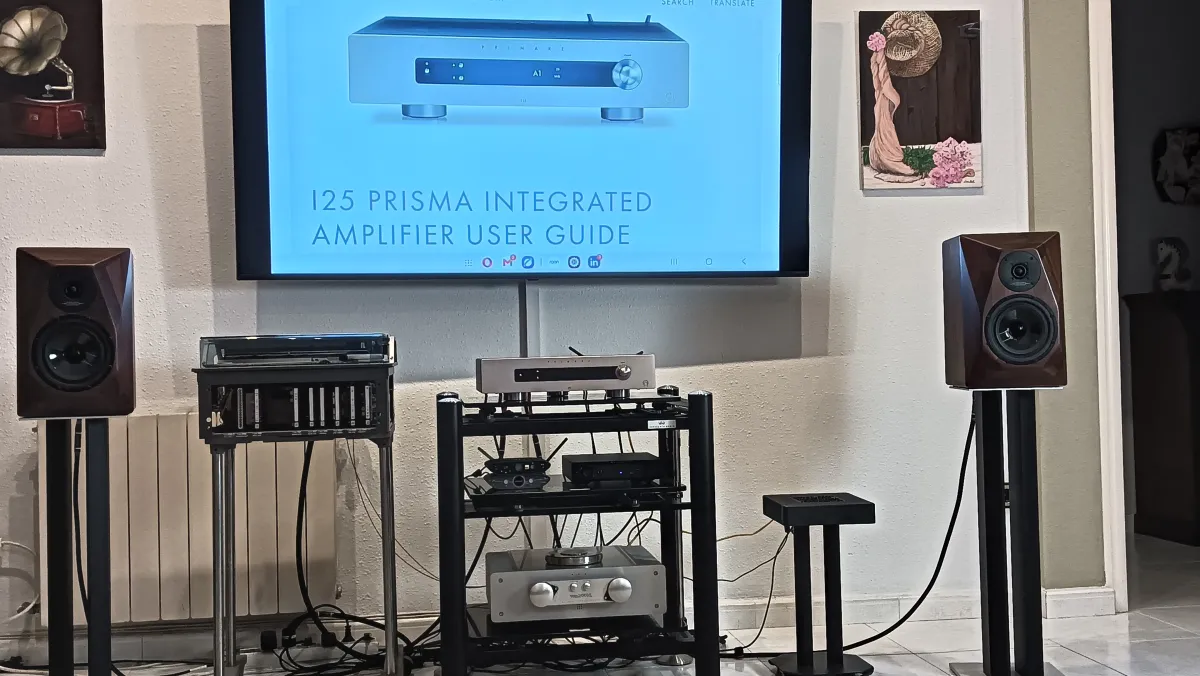
Equipment used in testing
Sound source:
» Qobuz Studio
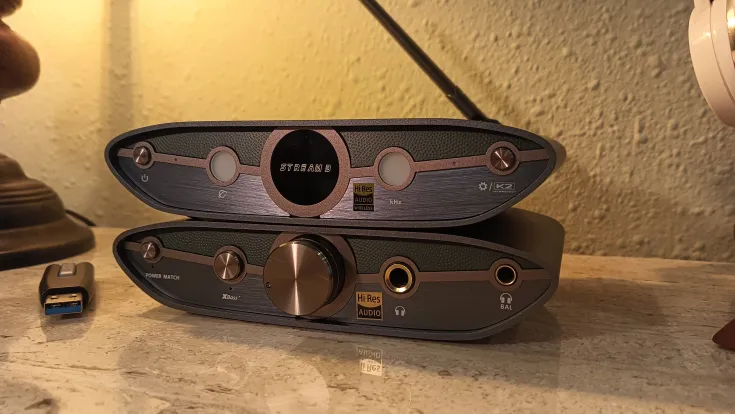
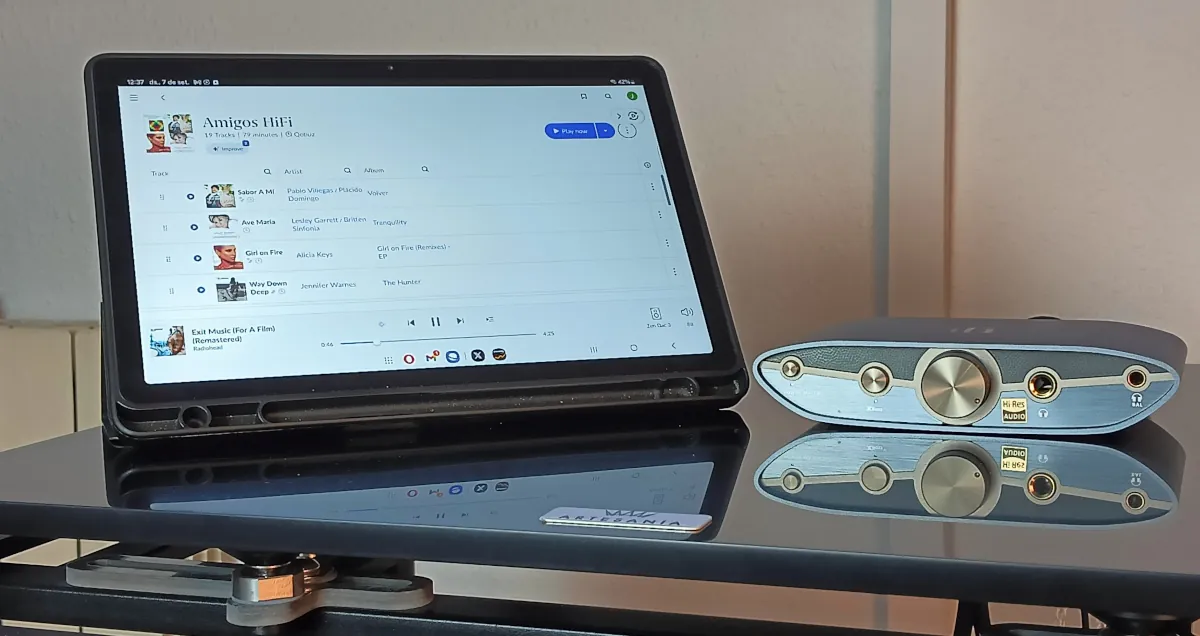
» iFi Audio Stream 3
» iFi Audio Zen One Signature
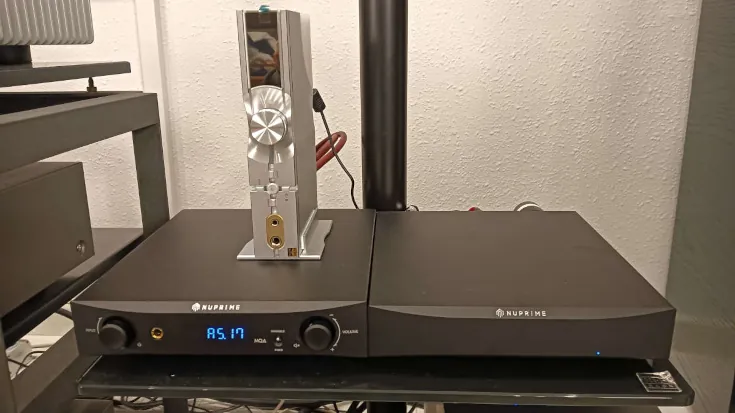
» NuPrime DAC 9X
» Roon One
Power Amplification:
» Primare i25 Prisma DM36/SM35
Headphone amplifier:
» Little Dot MKIV
Speakers:
» Diapason Adamantes V mod. 2025
Headphones:
» AKG 701
Cables:
» Wires4Music in wiring:
» Horus Hybrid RCA interconnects
» Evolution for speakers and power supply
Hi-Fi Rack:
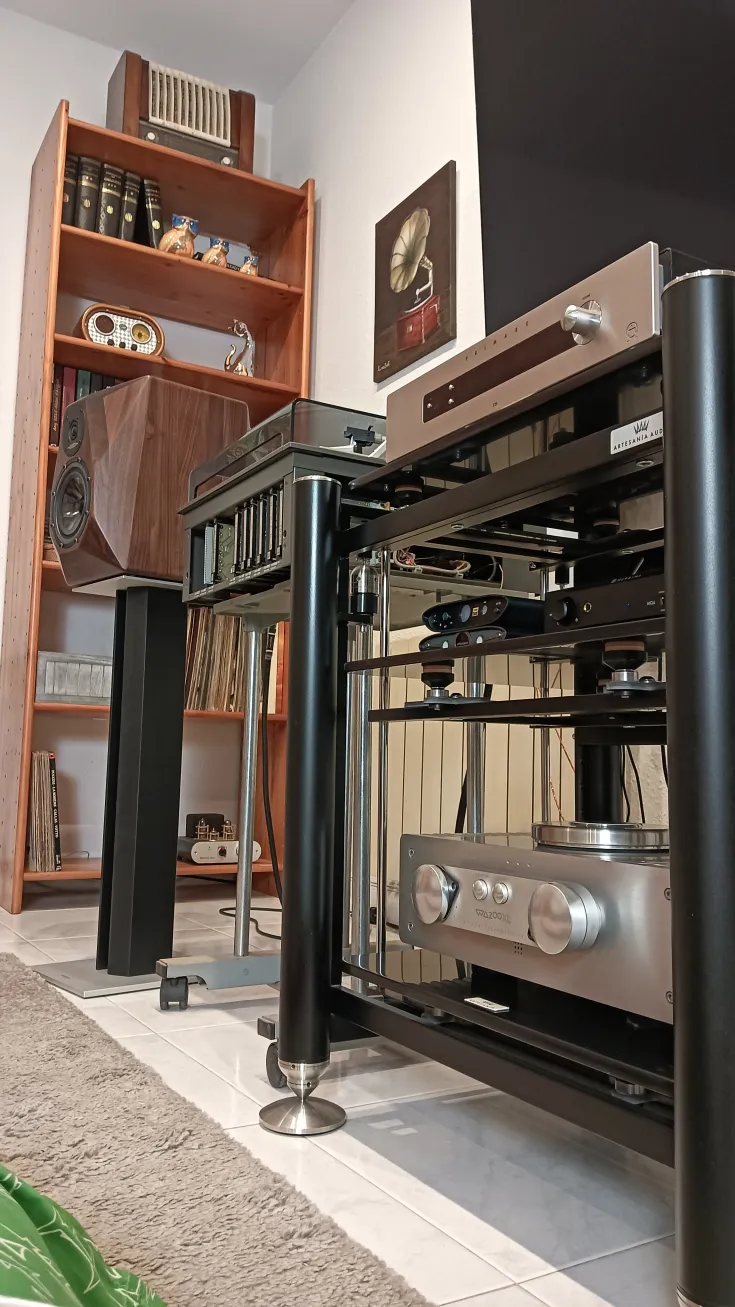
» Artesanía Audio Exoteryc Rack PRO
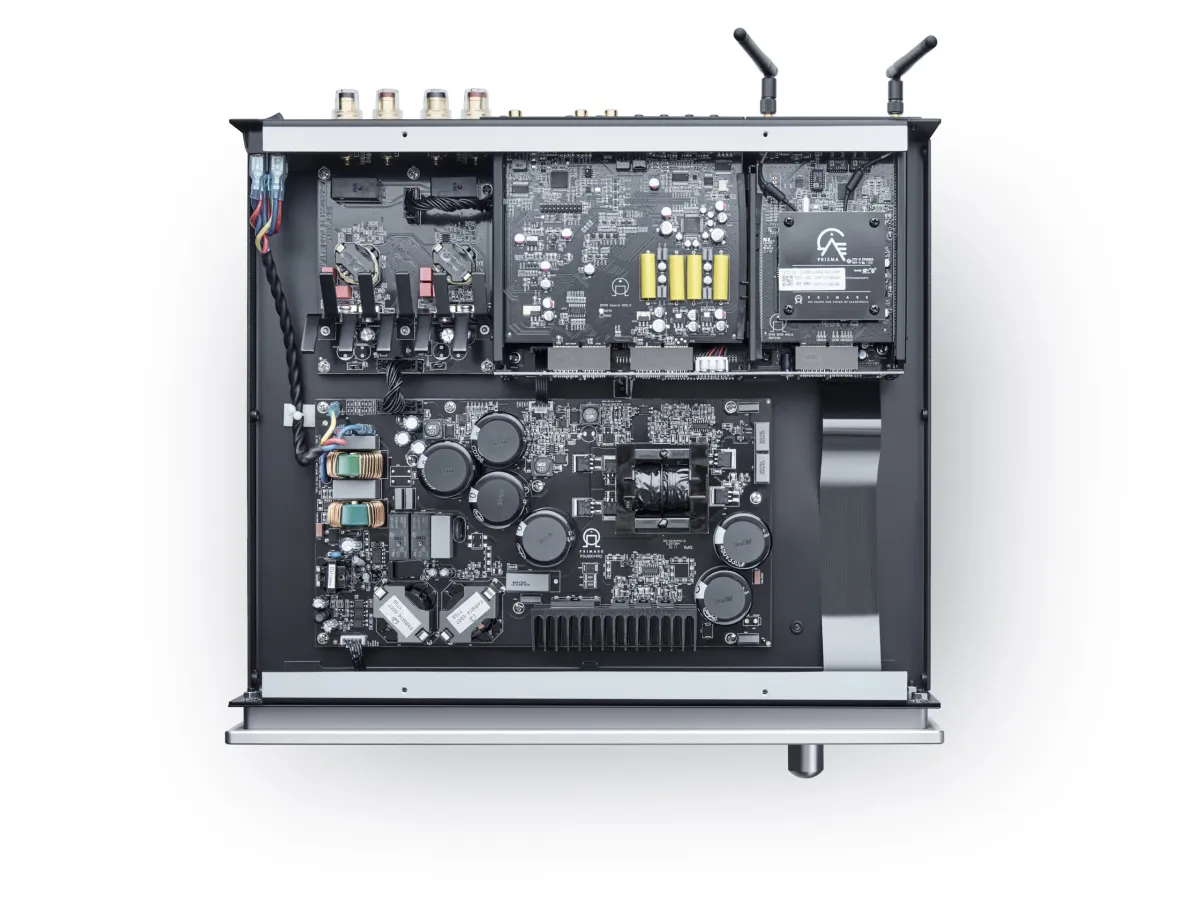
The Primare i25 Prisma is a modular system
Primare designs its products with a clear vision: they are upgradeable and modular. According to its philosophy, the integrated amplifier is just another component of the i25 Prisma system, as are its digital module DM36 and its SM35 network input control module. Therefore, viewing the combination of these three components as a single product might be the most accurate way to describe the product under review. And if necessary, any of these components can be replaced in a few years with their most up-to-date versions. I like this concept, especially in the digital world, where improvements and modifications are constant; I don't like having a good amplifier and losing some of its performance because its digital section has aged poorly. And you see this every day in countless products.
And in line with what was discussed above, this system must be evaluated differently: the sound of the main unit, i25 Prisma, versus the sound of the DM36 Prisma DAC connected to it. So let's get right to it without further delay.
i25 Prisma
Although it has a veritable arsenal of inputs, it lacks balanced inputs, so I couldn't connect my EMT 948. That's a shame. That said, the i35 Prisma model does have two balanced inputs and a few extra watts of power.
I don't think the evolution of Class D amplification over the past few years is well known to all audiophiles. And, just as with the launch of the CD, its initial—and justified—bad reputation has hindered the recognition of this technology to this day. Another drawback of this type of amplifier is the overuse of color displays to make the unit look spectacular at the expense of sound quality. There are countless examples of this today, and there's no need to single out any specific ones; you all know what I mean.
Since I don't want to pretend to be an expert in a field that isn't my specialty, I'll leave it to those who do understand technical parameters to examine the rationale behind the special handling of power levels between the amplifier and the speakers provided by UFPD 2 technology (Ultra Fast Power Device 2). Although the results in the listening room, combined with the Diapason Adamantes V speakers, were satisfactory—more than satisfactory, in fact.
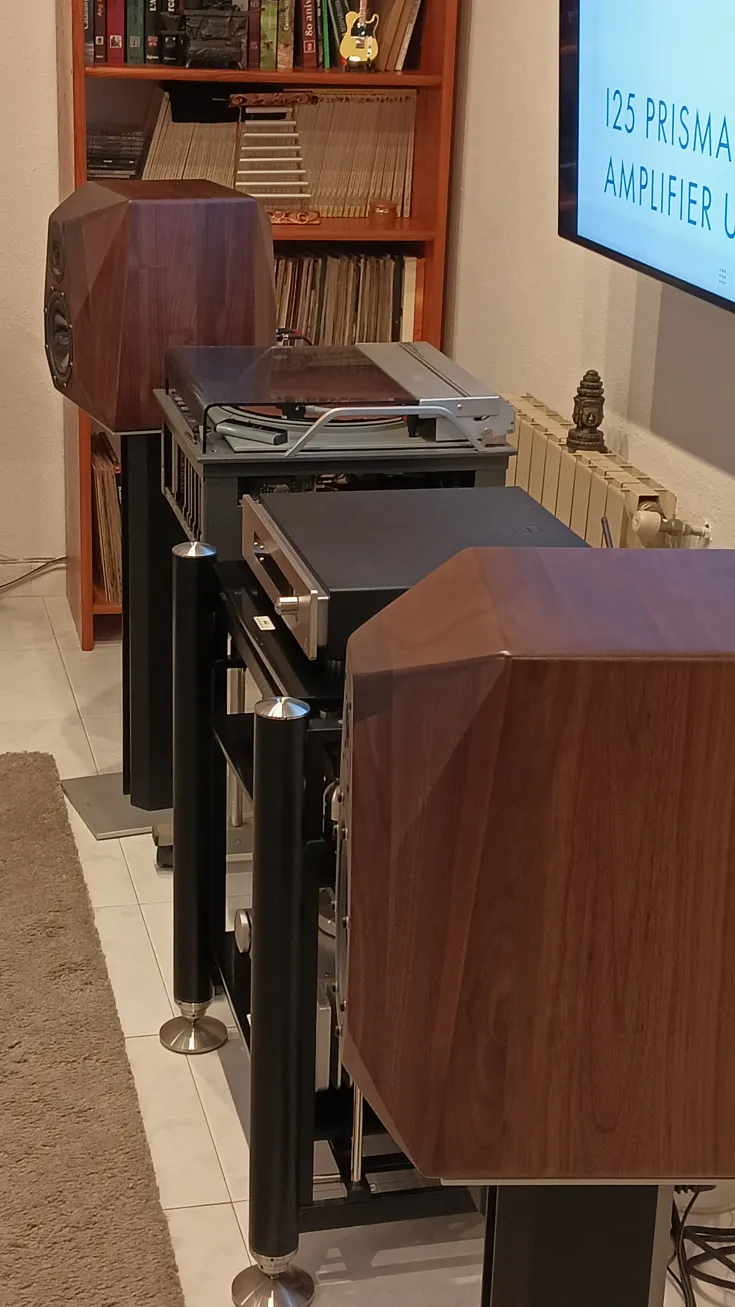
Because of a stupid sense of paternalism, I tend to listen to music that's likely to sound good on the equipment I'm testing, and I raise the bar as they pass the various tests I put them through. These are always listening tests; anyone looking for metric tests should consult other sources.
This was no exception, and I started with Jean Michel Jarre, "Rendez-vous"; Maná, "Unplugged"; Roger Mas / Cobla Sant Jordi Ciutat de Barcelona. Second round: Marla Glenn, "The Cost of Freedom"; Moby, "Why Does My Heart Feel So Bad"; Marvin Gaye, "Sexual Healing".
At this point, Class D amplification typically begins to show its limitations, with bass that is wide but lacks any body. It's like stage decor where the scenery is painted or drawn, but it's just a piece of fabric hanging from the ceiling.
It's a challenging situation, since Diapason Adamantes doesn't give anyone any breaks. The amplifier has to do it all to bring the music to life. And the truth is that we overcame that empty stage with a vibrating thud on every powerful beat. I'd even go so far as to say it does so with more character than my usual amplifier, a Bow Technologies WAZOO XL. This surprised me because it was unexpected, and I like surprises.
Given the musical variety I've described above, you can deduce that I always focus on performance in the midrange and upper midrange. This is the easiest range for this type of amplifier, and I gradually lower the main cutoff frequency to push them further and further and see how they develop their potential.
I should add that I conducted these tests using my reference DACs to get a clearer idea of what the amplification contributes, so I can separate it from the DACs own audio conversion. In this case, the pairing with the Nuprime DAC struck me as more balanced, with good synergy between the two. As always, it's worth noting that the comparison is somewhat unfair due to the price difference between the two, with Nuprime being significantly more expensive than iFi Audio.

Moby is a religion
New York-based creator, musician, and producer Richard Melville—better known musically as Moby—creates a creative atmosphere that fills the soundscape of any venue where he performs, whether it's a living room or a soccer stadium. His creations tend to fill every void, every corner, and every soul. Some of his best-known songs sound like Hindu mantras, while others are as spiritual as the deepest gospel music rooted in the heart of African American evangelical churches.
It has long been clear to me that I never choose the music I want to test with the systems I review; rather, it is the sound they produce that chooses the music. I, for my part, act as a mere intermediary. If you pay attention to the music I suggest, you’ll gain more insight than many of the recurring phrases in writings like this one can provide. The Primare i25 Prisma has connected me with Moby. Especially when he collaborates with the German record label Deutsche Grammophon. These are combinations of the best of both worlds, with recordings crafted with meticulous attention to detail that allow you to get the most out of your audio equipment—and, if necessary, expose its shortcomings when it doesn't measure up.
And I don't want to end this section without a musical recommendation for all of you; if you want to test your system's dynamics, nothing beats Paganini. There's a recording called "Diabolus in Musica"; the last track on this album is the closest thing to a stress test for violin strings—it's called "Perpetuela."
DM36 Prisma Sound
The digital-to-analog converter module integrated into the system brings such a distinctive character that one could well say it changes the overall concept of the i25 Prisma. Unlike other integrated amplifier models that have hastily and poorly added an internal DAC at the last minute to meet market demands, I don't think that's the case here. The tonal character it brings to the system as a whole is so distinctive and well-defined that it's undoubtedly a very deliberate design choice. This is possibly one of the most balanced DACs I've encountered over the years. It has one very clear characteristic: a sound that's well-suited to any type of music. Its sound could be placed in the warmer, tube-like range of the frequency spectrum. It softens the sharpest and most aggressive edges of tracks, transforming them into something richer and more delicate. This behavior allows it to deliver good sound quality across all musical genres, without reaching the absolute peak that other designs do, though it also doesn't descend into audio hell like so many other integrated DACs.
And what I mentioned above is not a criticism, but quite the opposite. In my daily life, when I listened to music while playing my daily game of chess, this was my preferred setting. The musical reliability it demonstrated in handling any type of music appropriately was my safety net—I knew nothing would catch me off guard.
On an imaginary scale, where I would place my two reference DACs, this one would be in the middle, closer to the Nuprime.
Final Conclusions
The Primare i25 Prisma, with its two added sound and connectivity modules, creates a system integrated into a single enclosure with such a distinctive sound character that it is easily recognizable. Its range spans from the most dynamic and lively performance of its amplifier section to the warmest tonal character of music processed through its DAC, with countless inputs to handle any digital needs in the home.
Its endless array of details is designed to enhance sound quality in every possible way—not only in the system's design but also in the care required by the lucky owner of one of these units. It all adds up. And the sound is the sum of all its elements.
It has conveyed to me a sense of capability, a drive for perfection, and the potential for growth in a future we never know when it will arrive.
| Manufacturer"s Website | Primare Audio |
| Distributor Website (Spain) | AVI SPL Ibérica |
| Price | Contact for price |
| Technical Data Sheet | Click Here |
| User Manual | Click Here |


More review
-
-
MoFi Electronics SourcePoint 10: Balance, Musicality, and Unexpected Maturity
The MoFi SourcePoint 10 speakers are, above all, designed to let you enjoy music without...
-
iFi Audio Zen DAC v.3, intelligent evolution
iFi Audio ZEN DAC 3 is the natural and sensible evolution of its predecessor